
Author: deanbelcher
Week 2
PHO702.The Unseen and the overlooked
This module has been my favourite so far I have a lot of writing to catch up on and the topics covered are providing us with plenty of material to digest and discuss, maybe a bit overwhelming but none the less fabulous.
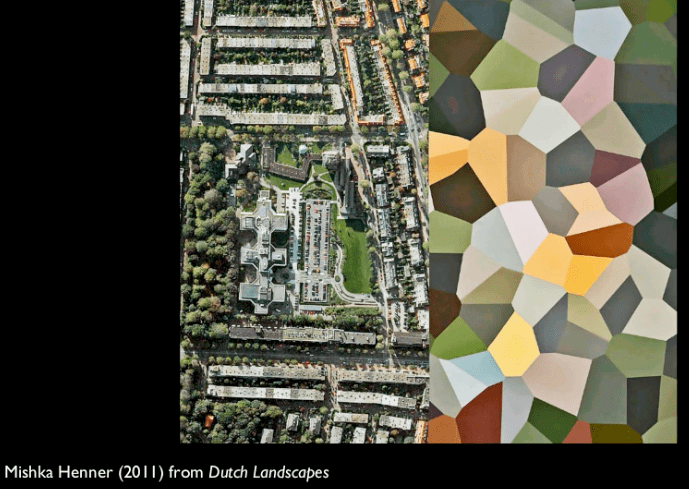
Today we had a “bonus lecture” discussing the everyday and banal, we discussed how often overlooked subjects or objects even in the vernacular become important and valid by the the act of seeing and more importantly by the act of being photographed.
In its broadest sense we can look at the work of Eadweard Muybridge who’s images could only have given us that vision via the camera, his images of horses running for example was a new view on a familiar subject that actually painters had been getting wrong.Google Earth is another area where the familiar is viewed in a new way that only through the lens of a camera we see a version of the vernacular.
These are of course quite extreme examples and in this post I hope to explore the other end of the spectrum and some of the work in between the two.
PHO702 Photography and Photographies Week 1
Learning a new language around photography and photographies as been amazingly interesting to me and as a practitioner of over 30 years in photography to learn so much really excites me.It certainly as helped question my approach within my own practice which is traditional in as much as it is very much camera/lens based.
In discussing what photography is we looked at the Modernist perspective through the work of John Szarkowski and Steven Shore and there respective essays The Photographers Eye and The Nature of Photographs we then took a look a very different look via Carol Squires who curated the exhibition What is a Photograph at the ICA New York in 2014 in which we explore less traditional methods and ways of using photography, some of which was non lens based mixing painting and Sculpture along side more experimental techniques that I will touch upon whilst discussing the opposing ideologies.
When we talk about photography as seen through the eyes of Szarkowski who concentrates more on the photographer,whereas Shore places his emphasis on the photograph, print ant its own life as it enters into the world.
Both discuss very valid arguments that in my opinion are equally important in the process of image making, the intent and the context in which they are viewed.
Interestingly Szarkowski places much importance to the eye of the photographer and the intent by physical means and choices the photographer makes, he divides these up into 5 subject areas . The first being the Thing ie the subject matter the indexical trace of the real thing but not actually the real thing, its a trace ,a representation if the real thing as seen through the eye of the author/photographer,it is only possible to capture a small part of the Thing,a fragment in his words The Detail which in its self is only part of the whole story again controlled by the photographers intent,images that attempt a narrative arguably have more in common with painting and the painters eye as they tend to be a total construct where everything is created to the internet of the photographer and go against the Szarkowski’s theory. He was not convinced by the Tableau of Henry Robinson,but would in my opinion be hard pressed to argue the same case against the modern equivalents such as Gregory Crewsden who’s modern techniques owe as much to film making as painting to build a convincing narrative. Below are examples of Henry Robinson,Crewsden and also the photographer Red Saunders who unlike Crewsden,who shoots much of his work in camera with elaborate sets and lighting,Red uses the modern equivelant of the cut up negatives of the Victorian tableau, he uses 40-50 plates or separate images to build his images all drawn and shot listed to the final detail. I’ve also added one of my own attempts drawing on the all three photographers in my project exploring the emotion around music.
Moving on he talks about the frame and how that selection has to be made by the photographer, how the scene continues on beyond the four edges of the frame and the photographer has to make that choice as to what it is he/she intends us to see, again arguably that is not the case in the constructs around the work of Crewsdens set built images but would be with the images he shoots on location, despite such huge amounts of research the very nature would mean some form of compromise that he would have to decide on in where he put the frame edges.
Time is the next important area discussed, the decision of when to press the button being the precise time the photographer feels all the elements of scene are in balance and the image becomes a picture, much like when Henri Cartier Bresson talks about the desire moment, to me this seems the most obvious element but also one of the hardest to acheive,often requiring the experience of forethought and planning and of course in some cases patience, miss it and its gone.It’s probably the element most out of the control of the photographer.
Szarkowski talks at length about the language of photography, how we interpret time and have learnt to read photographs using such techniques as blurring to allude to motion, it’s interesting and something as viewers we have had to learn from scratch.Other areas and one of Szarkowskis other areas he breaks his theory into is the Vantage point.We as photographers have to place ourselves in the best vantage point in order to find the Thing,maybe move slightly to find the Detail and Frame accordingly, we certainly need to be in the right place to anticipate the correct time to shoot, for example, put simply if we are shooting a alleyway with a the perfect light but want some human element in silhouette we need to be in the right spot to anticipate the time that person walks into that perfect spot.
PHO702 Subjective traces, spaces,faces,places Week 3
All images are of course constructed in some way or another either by the means of technical constraints,circumstances and what the photographer and to a lesser sense what the viewer decides to include either by cropping or adding.
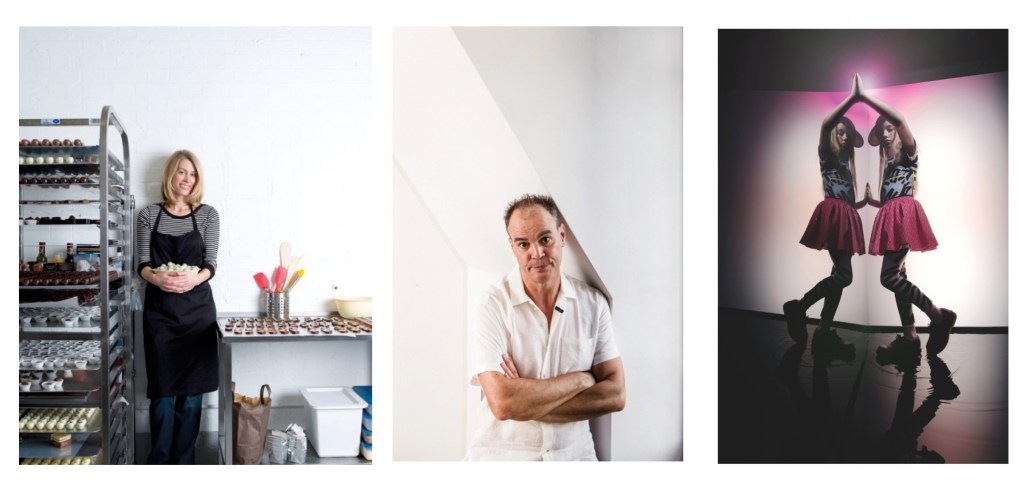
Below are 3 simple examples from my commercial practice Illustrating the use of construct to convey the message from left to right the first one is quite obviously a chocolatier shot for a magazine with no doubt as to what it is she does for a living, in this instance it was quite simply my job to do show this in very basic terms using a construct of her wares and friendly smile.The middle one is of a well known author with whom I wanted to capture ,ore about his personality, I could have put him in front of a book shelf full of books but that could be construed as rather lazy and not a true portrait. I was under time pressure and had only the choice of the bookshelf or this tight alcove and chose this. I knew I could create tension, he is a writer of thrillers and whilst is perfectly pleasant as a sharp reputation, I wanted to get this across in the image and use this simple tool to do it.
On this note I have often heard amongst more technical photographers how the work of David Bailey and Avedon is simple, well I would say yes technically it is but strip away any clues,construct or context such as in image number 1 and it really is not quite as simple to create a strong portrait.
The image on the right is pure construct and make believe from the simple set to the clothes and attitude of the actor/model, all constructed to create the final image of pure make believe in reality it’s a small set within a studio with artificial lighting and a child who in real life is a joy to be around …
Informing Contexts PHO702. Week 5 Fascinating Looks
Are we not all Voyeurs to certain and differing extents ? Not as suggested in a sexually deviant way but as humans most people have some sort of enquiring mind.
As a photographer I would say I am most definitely, in fact my entire practice as been based (without realising at first) the notion around other peoples story.In my own practice I have spent most days finding out about other peoples story through my work as portrait photographer and now through my MA research into landscape. My gaze does not come from a point of judgement I am genuinely interested in how other people get to the point they are in their lives,whether it is someone well known or not I think we all have a fascinating and different story to tell.
Whilst I say I do not come at it judgementally I have to admit I do sometimes come to subject with preconceived ideas, maybe based on something I have read, public opinion,stereotype or of course on occasion my own formed opinion based on conventions and cultural upbringing, this will all inform the portrait and whilst the sitter may have one idea of how they see themselves (Freuds Id and super ego theory) I may have another.
This is the point where I have to be careful as a photographer to make my decision on where I set my gaze.
I am very aware in this position I wield the power and decision making process as to how the person will be portrayed by the viewer and here in lies the problem at least sometimes.Whilst almost every photograph I take is with the knowledge and collaboration of the subject therefore ridding the shot of the “other” they are not always aware with what context these images will be viewed so reintroducing the objectivity.
The context is paramount in the intent and the viewers subjectivity will change accordingly.For example I have shot many travelogues in many cities, in the context of the travelogue the image appears alongside many others to tell the story of the city.Singulary shown it could be seen as exploitative.
Susan Sontag (who seemed to have problem with everyone) certainly did not like the work and approach of Diane Arbus who’s work can be a little difficult at times and could certainly be seen as confrontational and possibly exploitative especially when it comes to her work with the kids she photographed with learning difficulties and Downs Syndrome. I think maybe because Diane Arbus had a reputation for photographing outsiders and what she herself called the freaks Susan Sontag lumped this body of work with the Downs kids in with that, it’s perfectly conceivable and maybe Diane Arbus did just see it as another branch of her work about people on the fringes of society, it’s true this generalisation is not healthy and now days thankfully we are able to distinguish the differences and act upon them but her intentions were always honest and thought provoking in a time when much of these subjects were being ignored and awareness was not high. I would argue it was Susan Sontag’s prejudices that were at fault in this case.
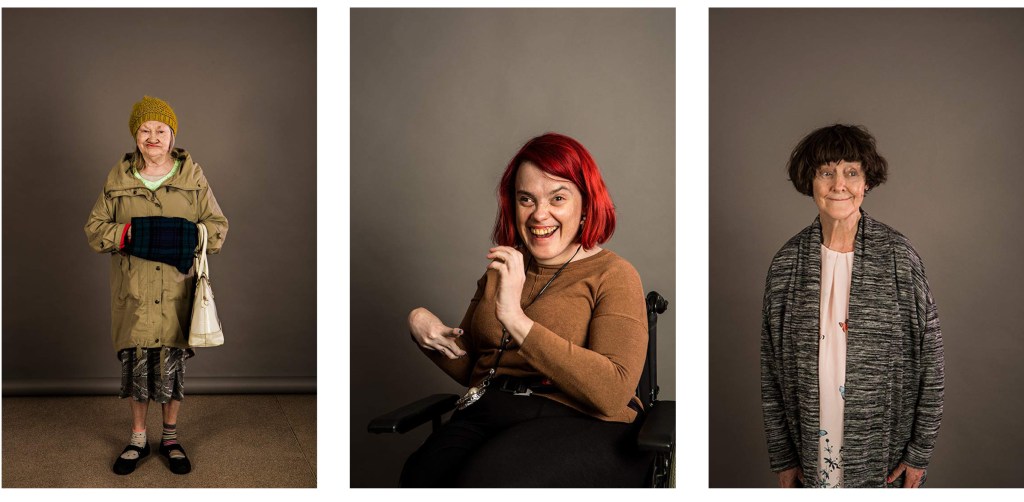
Below are some examples of work I have shot in collaboartion with a charity who work with people with Autism and learning difficulties. I spent a year on and off photographing around 200 people who live in care, the carers and people within the communities they live.The project was called Self and the idea was to help both the sitters and the wider community to question how they see themselves and others within the community.Done through exhibitions and workshops it’s aim was to raise awareness of the discrimination and of course lack of funding.
I did plan to shoot individuals in the rooms they live in with all there personality indicators to give context but decided in the end that a plain and simple background all the same would equalise/neutralise the subject and allow the personality of the sitter to shine through without distraction.I know where my gaze is firmly set with set of images but I have of course had my doubts a to what other viewers may think of my intent outside of the context of the exhibitions etc…..what do you think.
Back to studies.Informing Contexts PHO702 Week 1
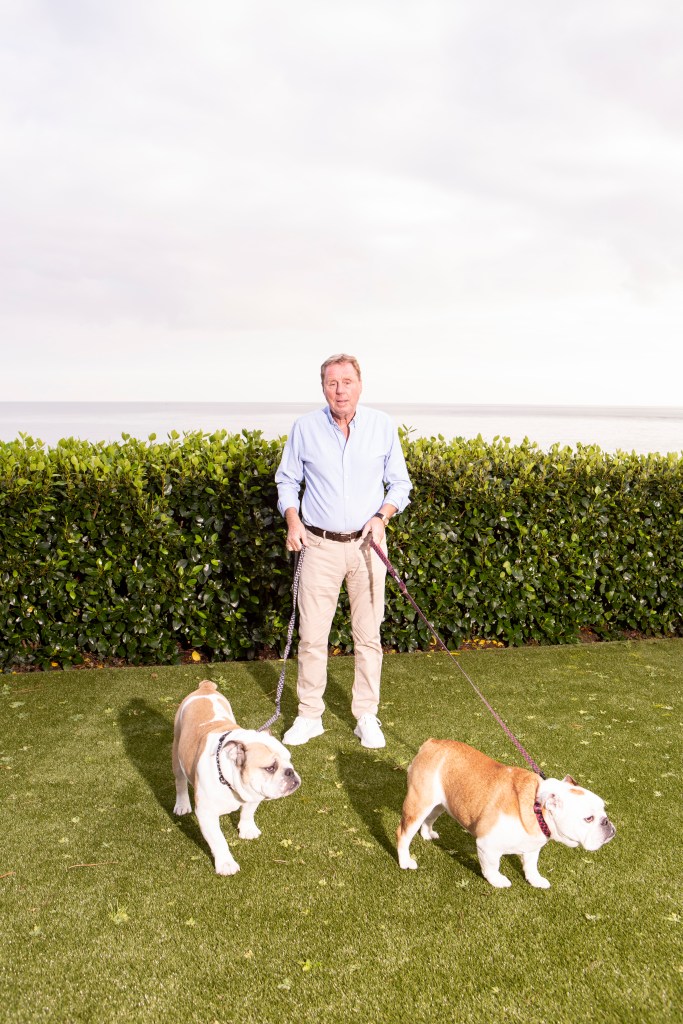
My practice for the past 30 years sits squarely within a commercial context,in as much as whilst I have shot much work that I would class as personal the ideas would often be formed with my commercial practice in mind.Whilst I have been commissioned to shoot many images to brief I have been lucky to have a very free reign with the majority. By working in an Editorial field I have most often been sent to interpret the shoot as I see.Mostly shooting portraits I would always have to consider the intent ie Illustrate a written story and context ,in most cases for a weekly or monthly magazine aimed at a specific audience and whilst I have been able to produce interesting work within those constraints it is non the less always with the context and intent in mind. If time and sitter allow I would always try to shoot something for “myself” which would not be indexed for use in the magazine but for my own intent that may or may not have already been decided.Sometimes if I have shone the picture editor these they have on occasion been used in preference to the indended shots.
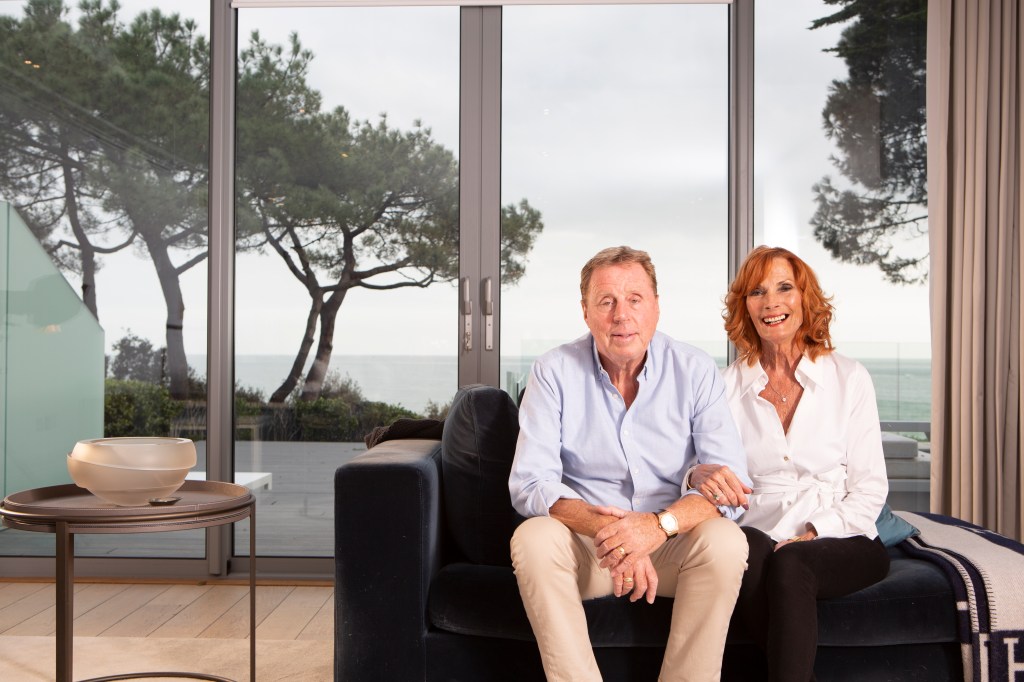
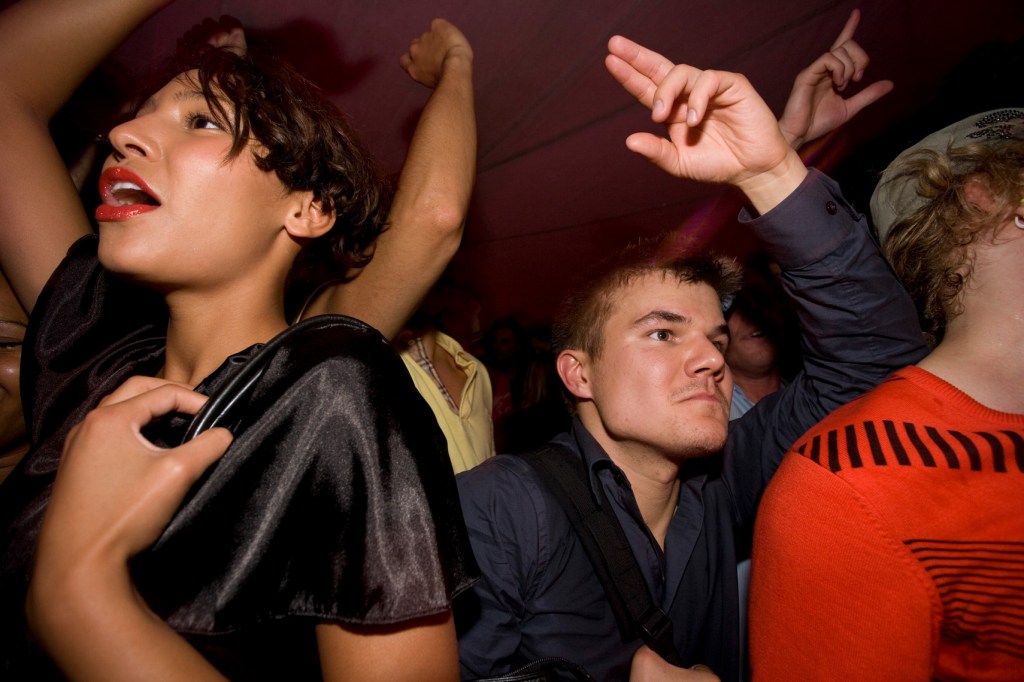
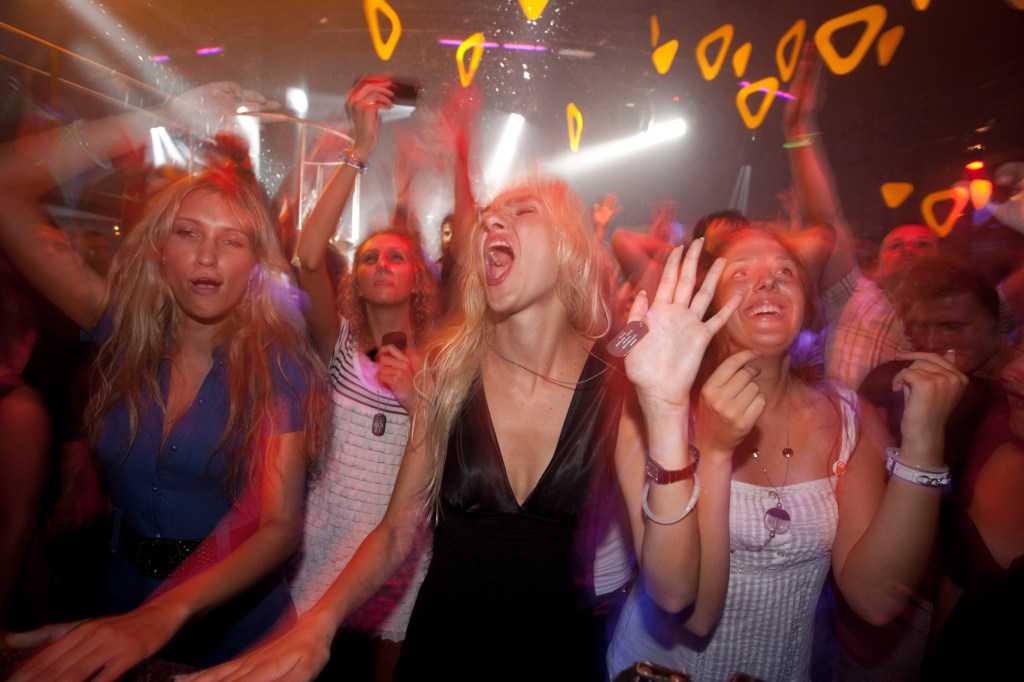
A very good example of work that has a context and and intent that also had a very free brief but as since been constrained by its own success is work I do with a record company called Global Underground. Work spanning over 20 years they originally came to me to help shoot and set a look, the brief was as I say very free but there was a context in which it had to be shown and fill, in this case a very elaborate piece of packaging incorporating a photobook as well as the music and an intention this case to inform the music but also create a sense of being there on the journey and adventure as we travelled the world with the Djs and fellow clubbers.This free brief by it’s nature of success mean’s that now that brief whilst remaining the same is no longer free as it now has to fulfil the same repetitive formula.
A result of this means my work does cross over into books and exhibitions and of course social media use. It certainly does affect the way my practice is viewed and that is a result of decisions I have made to steer people this way and create a brand that encourages them to commission me to shoot for them.Recently that as changed with more and more emphasis being placed on my personal work.
Sustainable Prospects/Drive by Shootings
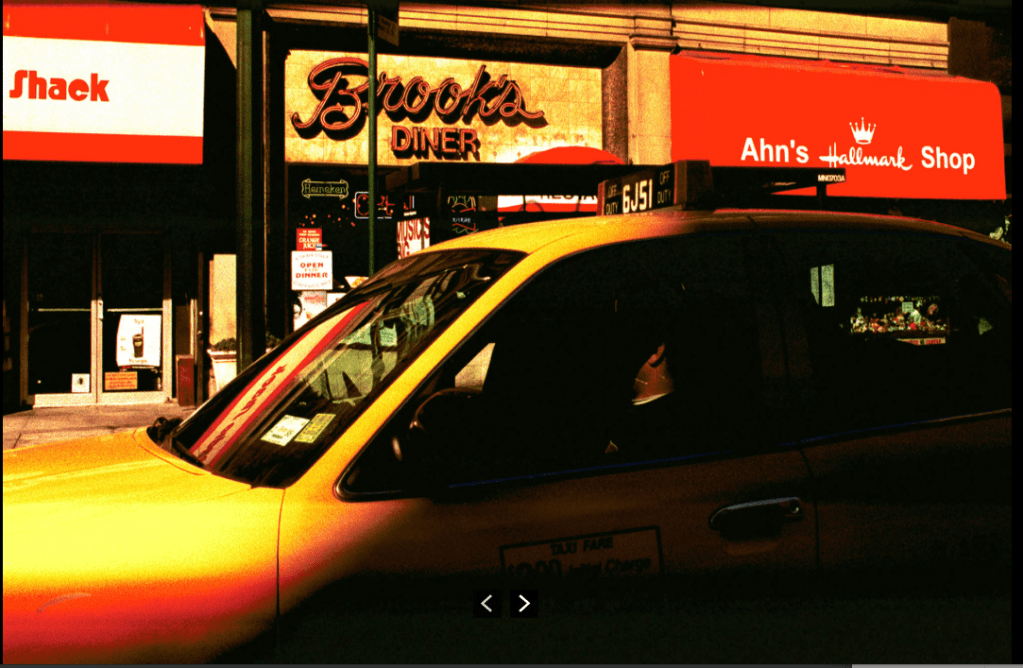
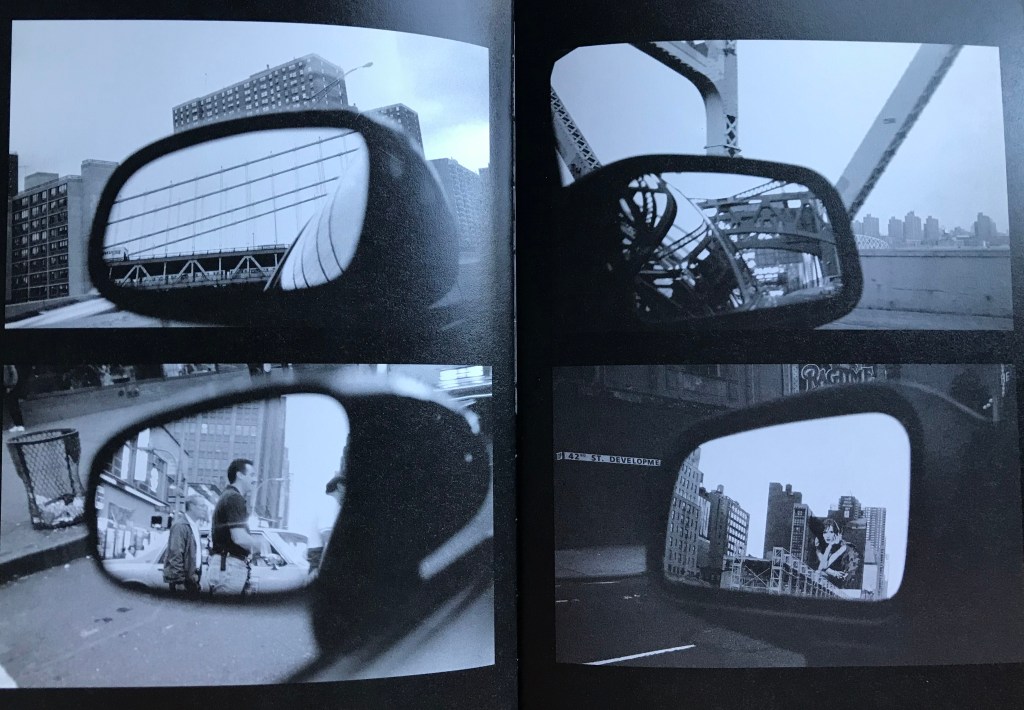
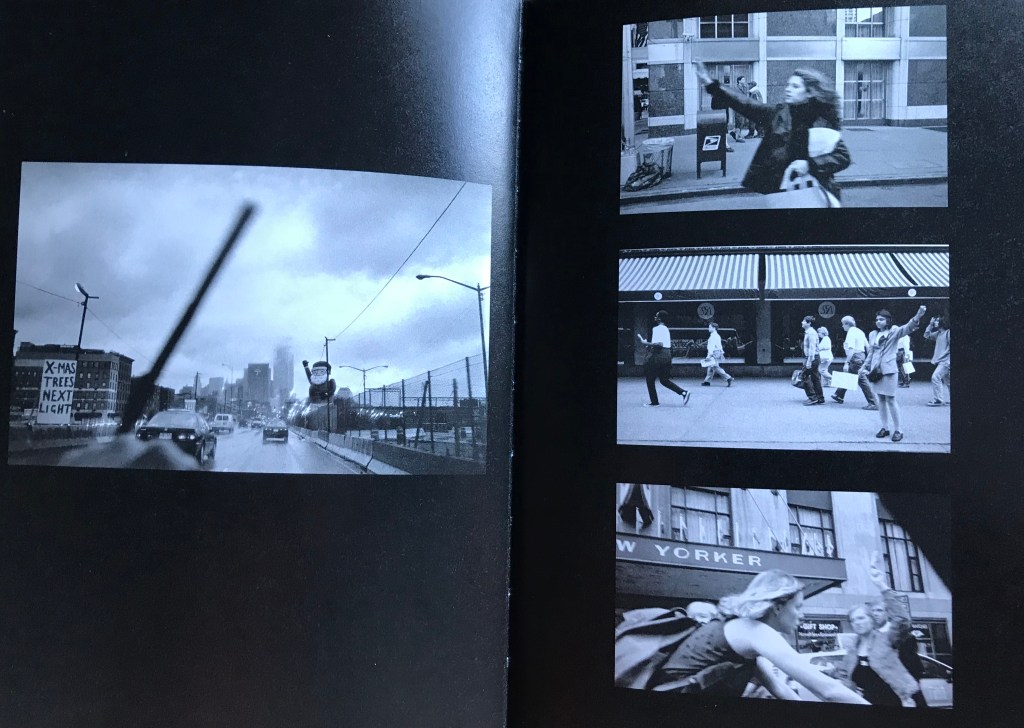
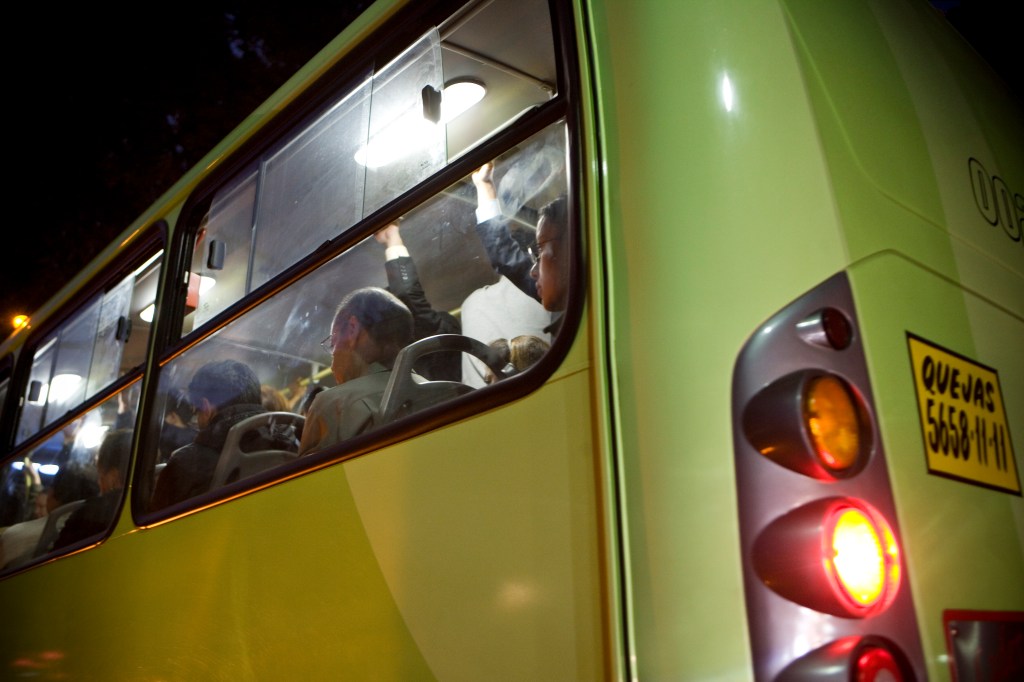
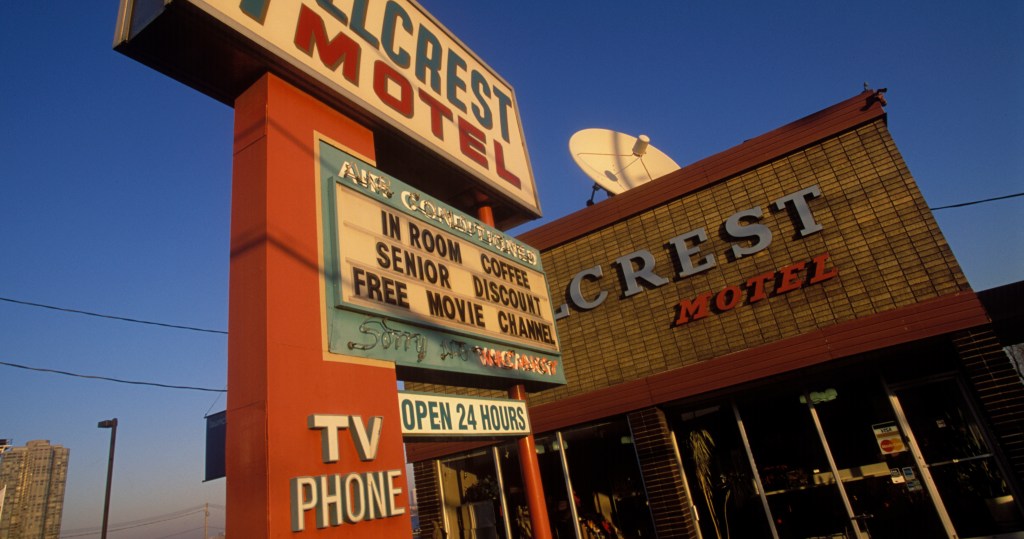
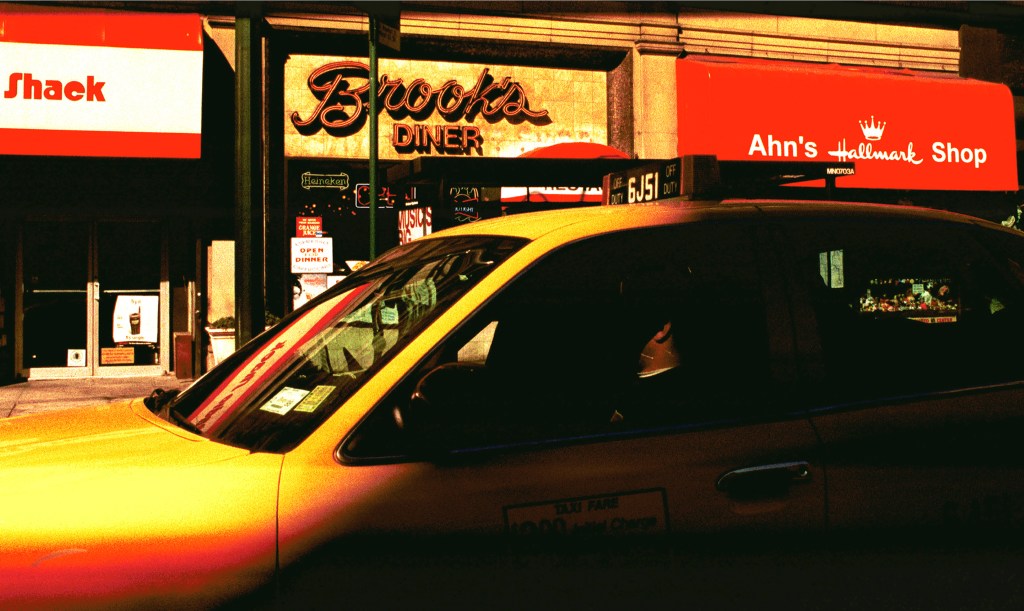
This is brief post about a photographer who’s book I bought many years from a charity shop,read,looked at once or twice then put away.I think you may be hearing more form me about him in the future,briefly David Bradford studied at Rhode Island School of design,graduating in 1978 after which he became an art director in New York but eventually decided it was not for him,he wanted to dedicate more of his working week to himself and his photography.He still had to pay the bills though !
To begin with he became a bicycle messenger to barely make ends meet and eventually decided to become a taxi driver.
Photographer,Taxi driver or both ?
I can highly recommend the book or perhaps check out his work on the website above.Fom the early 1990’s he took a camera with him everywhere he went,shooting over 50’000 images of New York life from the perspective of a Taxi Driver,nearly always from the window of the car. Amazing images that take us through a journey of time when New York was on the change.
Having spent a lot of time shooting in many many cities,I have often been driven from one location to the other,capturing images on the way,I see a parallel in this work and plan to explore it more.
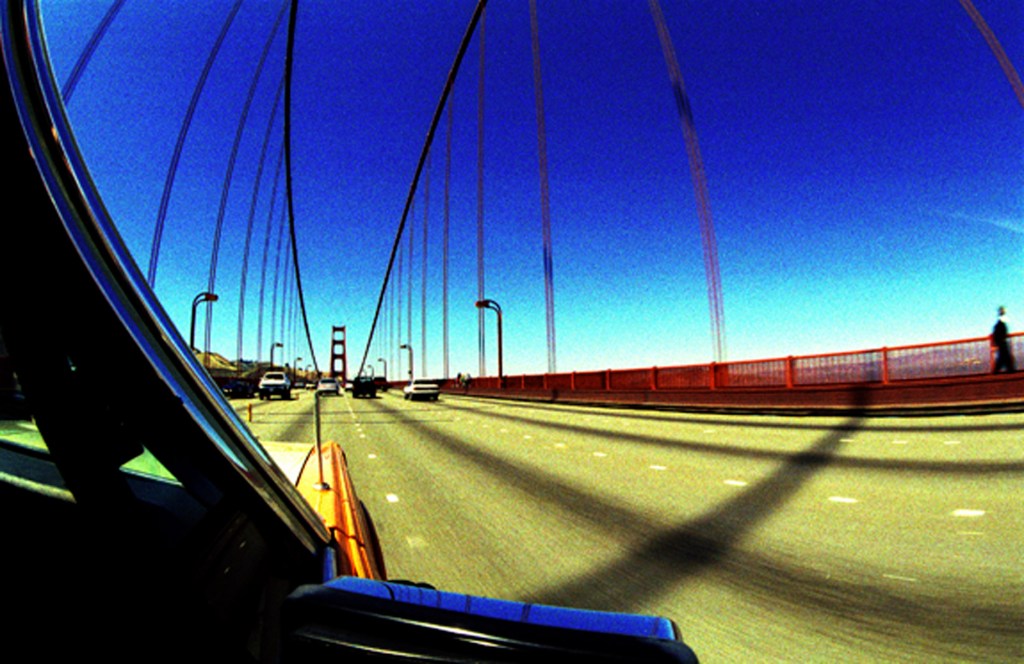
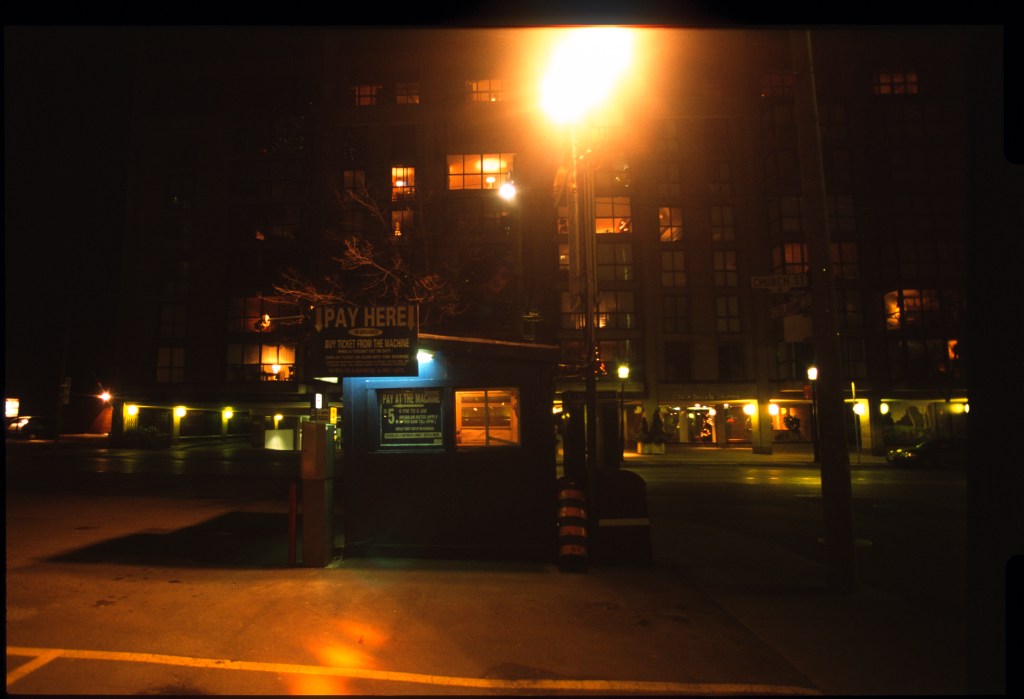
Though my research on the A406 project I can see a commonality with many photographers who have photographed the road and it’s surroundings,from the early pioneers such as Walker Evans through Todd Hido (who shoots through the steamed/iced up windows of his car by carlight)have all used this method of shooting either alongside or as a core element of telling similar stories around the road and the automobile.
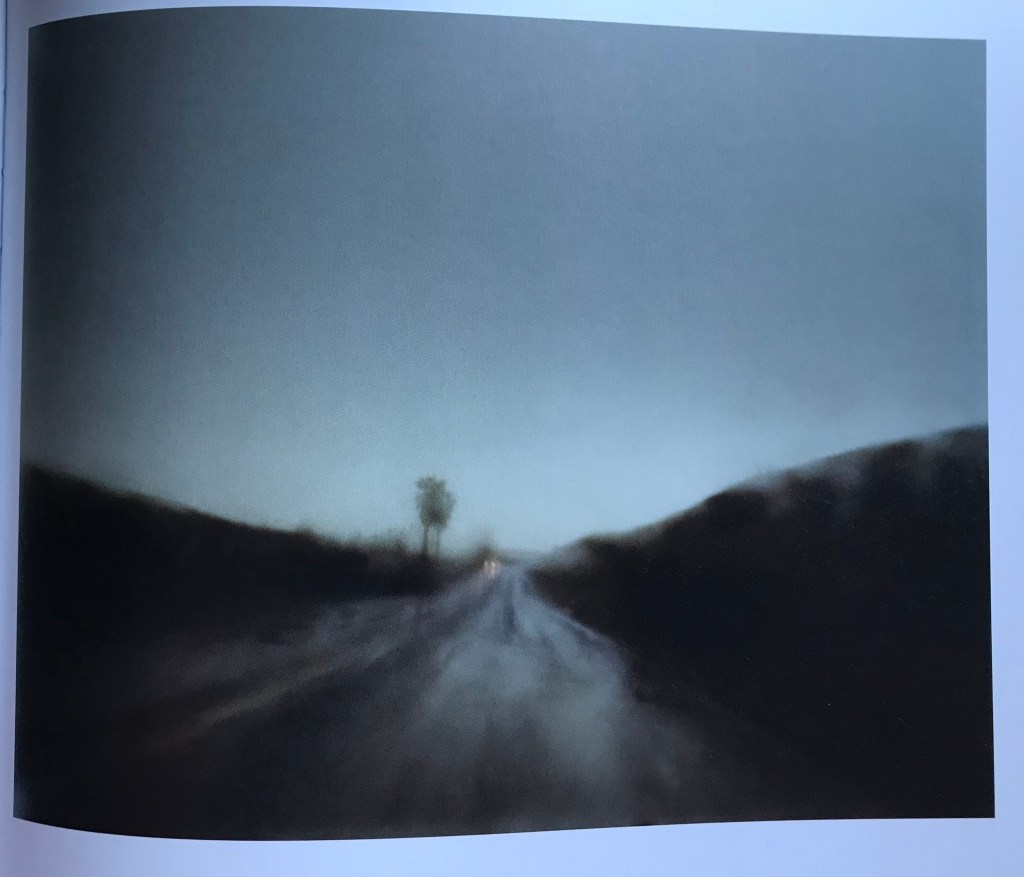
Todd Hino #9308 2010
Sustainable Prospects/A406/Oral Presentation
A406/Guidebooks and maps as art.
Before Google maps,A to Z’s and AA road maps, even before there were many roads and certainly before any signage and road names the new found car owners could use the Rand McNally Photo-Auto guide launched in 1906 to guide them. Essentially a series of photographs taken from the point of view of the driver with added text describing landmarks and juncture at which to turn left,right or straight on it could easily be described as a precursor to Google Street View and early use of the camera as a tool to aid motoring.Not unlike Google maps/street view it also suffered with the lack of updates only in the case of the Rand Mcnally these changes were far to rapid for it to ever catch up and so became redundant very quickly. Like Google Street View though these books have become a kind of work of art of their own.
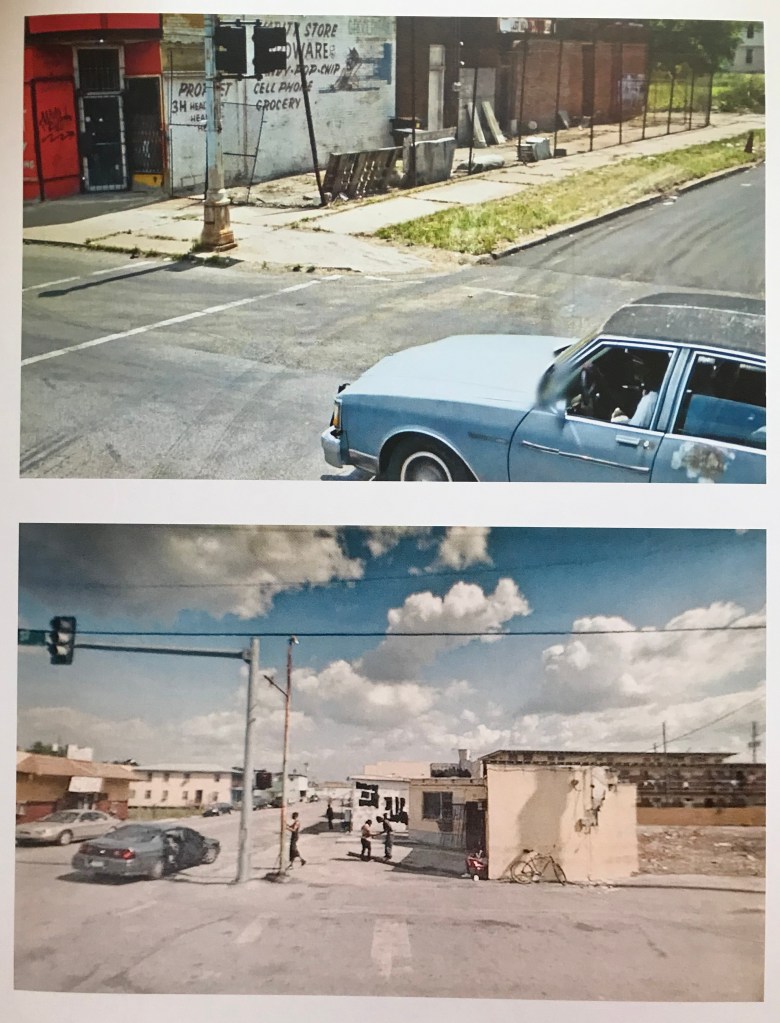
In the case of Google many artists have used it within their work.One such contemporary artist is Doug Rickard who scours Google Street Map looking for unusual scenes and scenarios often taking place at junctions,much the way many artists in the past might have done in the “real” world from the windows of moving cars .
Rickard makes good use of Google’s image library to virtually explore the roads of America looking for forgotten, economically devastated, and abandoned places. After locating and composing these scenes of urban and rural decay, Rickard re-photographed the images on the computer screen with 35mm camera then represents them as part of a new form of document
The low-resolution images that Rickard favours have a dissolved, painterly effect, and sometimes have people in them,some of whom are aware of the camera but are of course anonymous and blurred,adding another layer of almost surrealistic isolation.
Rickard’s work knowingly references traditional American photographers such as Walker Evans, Robert Frank and Stephen Shore and whilst he acknowledges them he strives to move the tradition on using new technologies to document a world in which a camera mounted on a moving car can generate evidence of the people and places it is leaving behind. These images present a photographic portrait of the socially disenfranchised and economically powerless, those living an inversion of the American Dream, again exploring the outsiders,the peripheral.
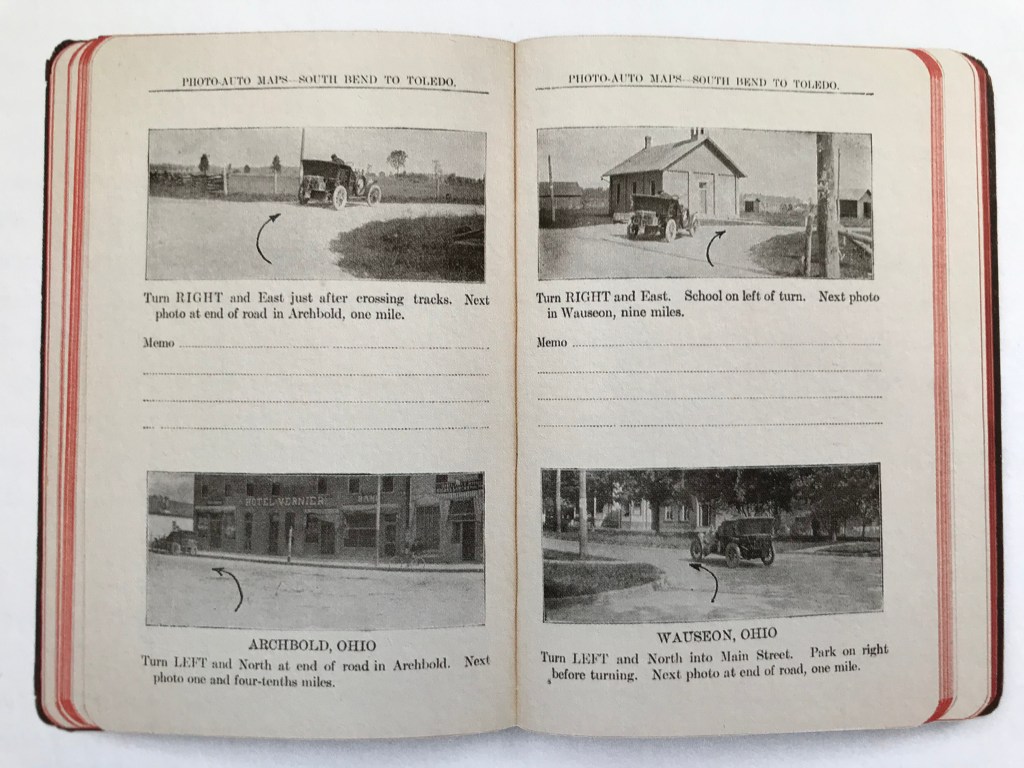
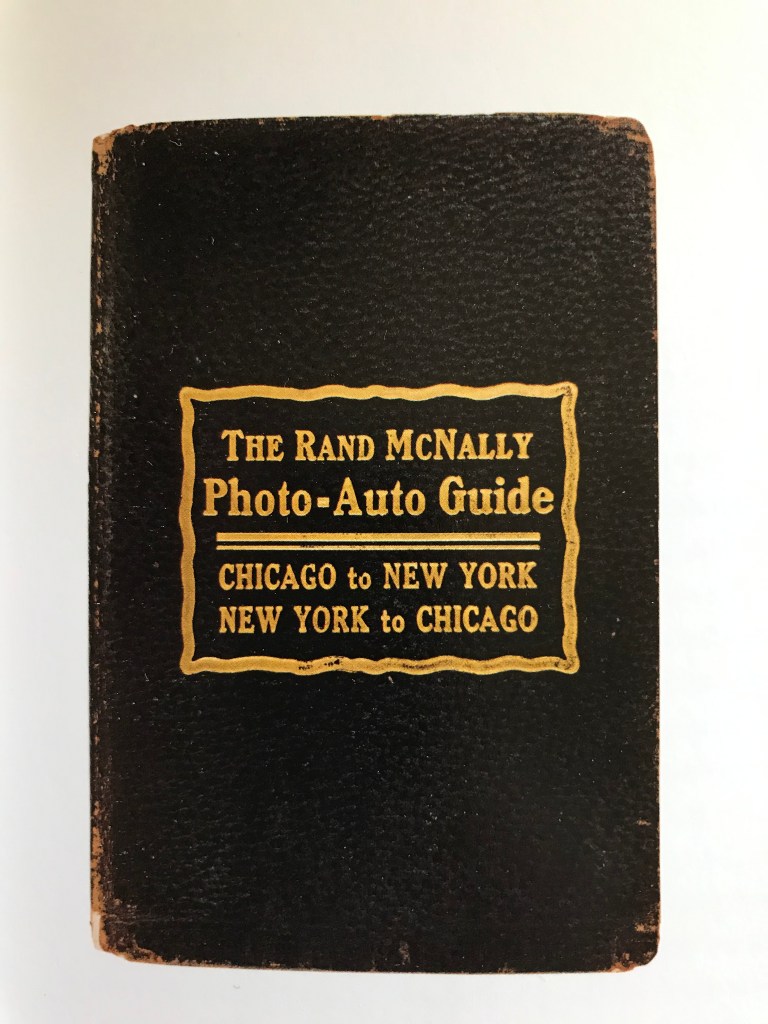
Top: Pages from Rand Mcnally Photo-auto guide New York to Chicago circa 1906
Middle: Front cover of Rand Mcnally Photo-auto guide New York to Chicago circa 1906
Bottom: Doug Rickard from A New American Picture published by White Press/Schaden in 2010
 DEAN BELCHER CRITICAL RESEARCH JOURNAL