It’s time to re evaluate at my work so far,i’m enjoying how it is evolving as the process of looking and research goes on. From an idea based pretty much in a more an anthropology study, more of a document of the road as a thing it as (and as I hoped) evolved into a vehicle to explore several avenues, most importantly to me via Human Traces. I’m fascinated in human interaction and believe deep down in the human psyche.It is very easy to be cynical and subscribe to the notion of humans being quite selfish and the root of all problems and quite often the way societies are set up (usually to benefit a few) that can appear the case but deep down when all that is stripped away I believe and want to investigate further in the next module how this notion may not be entirely true.I want to look at the way community and humans deep down are a social animal who thrive in groups and not as individuals.I want to help dispel the myth that “there is no such thing as society” as Mrs Thatcher once said. This is my goal next module.
Meanwhile take a look at the work so far (in no particular order) plus a few that got away…
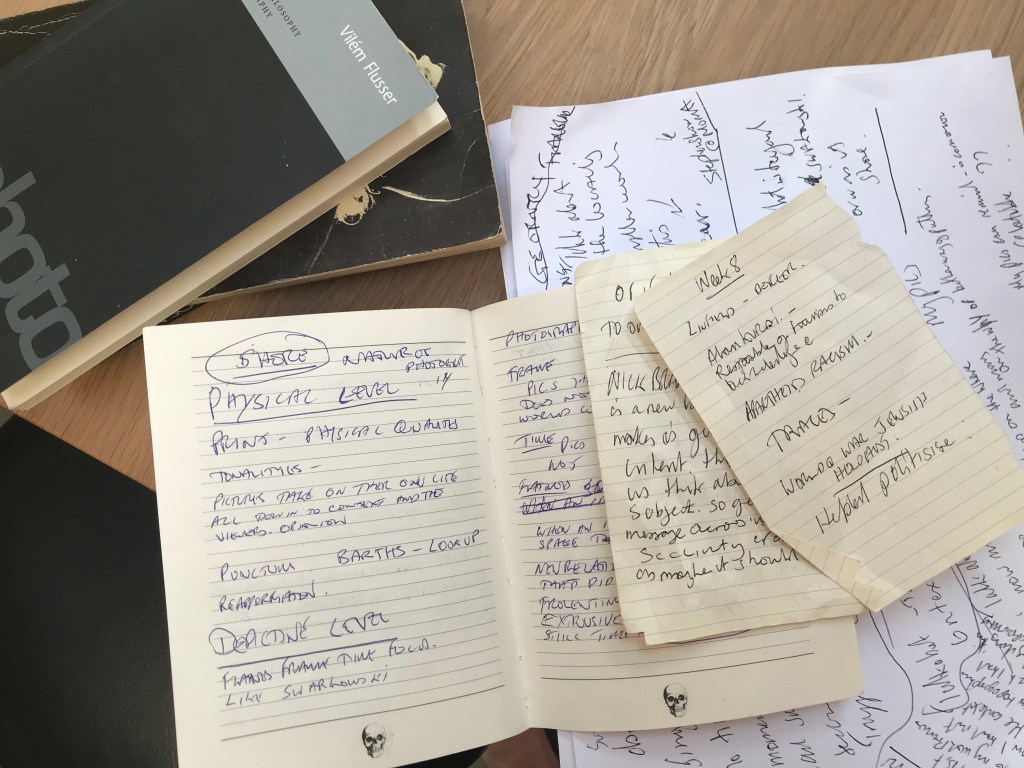
This week is assignment week ! I’ve weeks of notes to make sense of,and copy to my CRJ.It looks a bit muddled but it makes some sense to me.I’ve loved this module, it’s exactly what I thought doing an MA was going to be about. Time to write this lot up…note to self write up notes weekly !!
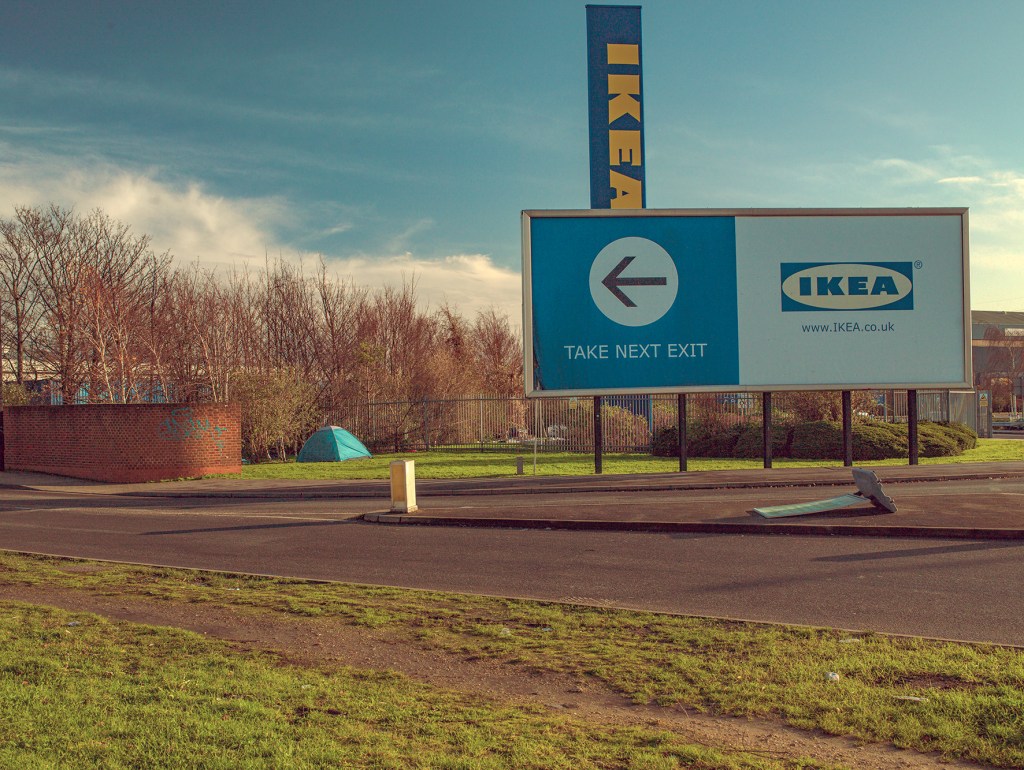
Today I came across a tent village close to the big Tesco and Ikea,so busy was it behind the fence with other dwellers there was one lone tent spilling over onto the verge.I’ve never seen it quite so full of tent’s. I couldn’t help wondering if he had been outcast or it was just too full behind the safety of the fence.
It put me in mind a tv show that was on when I was kid,a dystopian view of a world gone mad.With a hatred and mistrust of technology the world slowly becomes insular and territorial Check it out on you tube if you can, call The Changes https://youtu.be/zjVqHVo0nq0
I wrote this piece after Steph’s lecture but before I read Andy Grundberg’s piece in the New York Times.
However now I have read the task I think I have answered those questions below and have added reference to Grundberg where I see similarity in critique.
I too was one of millions who subscribed to National Geographic in the 90s. It’s funny because on reflection I think it was all part of a “package” of re education for me. Growing up we had no books in the house and I can never remember seeing newspaper or magazine other than the ones I brought home later as a teenager.My upbringing was not really a NG subscribing one.
When I started out on my career as a photographer I saw this self learning as essential and National Geographic became part of that. I learnt about stuff but like many photographers the images of most publications are the most important to me. I absolutely loved the aesthetic of the imagery and dreamt of being able to shoot similar.I still do love a lot of the images but quickly realised this was a definite National Geographic or as I thought then and now a very American (U.S.A) way of looking at the world aimed at a specific audience.
Quite idealistic, aspirational perhaps a little safe and unquestioning.Perhaps not wanting to upset its target audience.
As a cynical young Brit at the time who questions almost everything I quickly got this but continued to subscribe until I found I didn’t pick it up so often and barely read some issues. I guess that world view became one I didn’t subscribe to as my knowledge and visual language grew.
I also travelled to America a few times during that time and realised I’d been sold a bit of a pup.
Don’t get me wrong I love visiting the US but I realised National Geographic had sold me a beautiful slightly sanitised Kodachrome version a bit like the movies.
On a similar note I find it quite difficult to watch the Nat Geo TV channel, it always seems a little too much entertainment based, just not in depth enough on most subjects, kind of skims the surface.
In wielding this much power it is easy to see how come it’s influence on how many people believe and see the world according to the National Geographic.
I agree with Grundberg when he says little has changed since the magazine became more targeted at a mass market and Gilbert Grosvenor the editor in 1907 introduced a more visual, image led publication resulting since the 1950s in the almost trade mark national Geographic look without progressing much since.Whilst looking great it’s become a staid visual language that seems a little old fashioned.
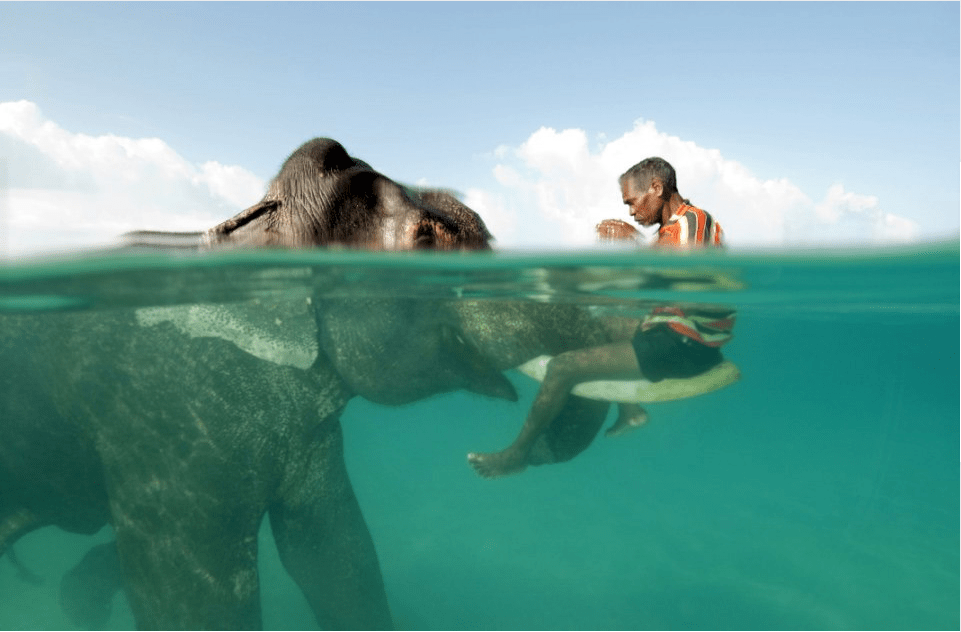
This image below is a good example of an idealised version of what we are meant to believed loving owner having fun with his dear pet elephant.I’m not going to say for fact that it is the case but my immediate thoughts are that it’s quite an unnatural position for an elephant to be in and reading further realise that the elephant is a retired logging elephant which most likely was beaten in order to work a very hard life for its owner, again there are of course arguments that the owner himself is put into an awkward position to save himself and his family from poverty so I make no judgement other than the one that National Geographic paints a picture of idyllic bliss which is probably unlikely to be true.
Image by Cesare Naldi
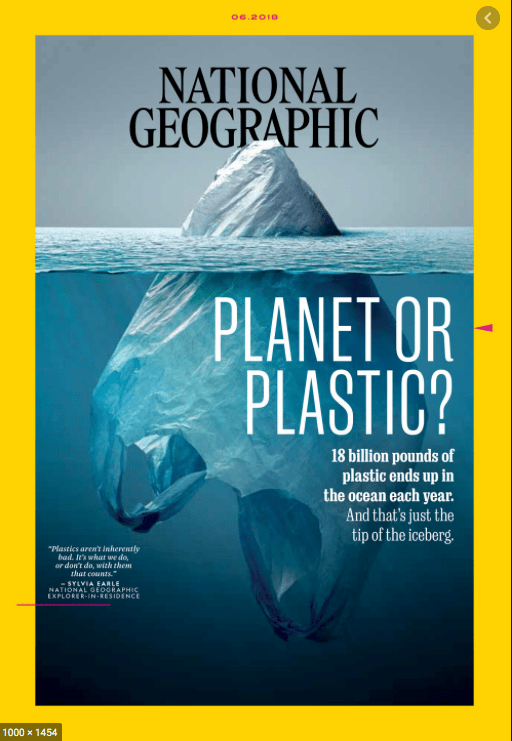
Where as this image below strikes a cord and appears to be more real, we all know that the vast majority of an iceberg is under water and that the plastic crisis is only the tip of the iceberg when it comes to matters of pollution, or maybe at least we as humans have only the data available that may only in actual fact be only the tip of the iceberg. Either way, it illustrates the point well and for a change the literal visual language of National Geographic serves the purpose well.
National Geographic cover, photographer Jorge Gamboa
Moving on….
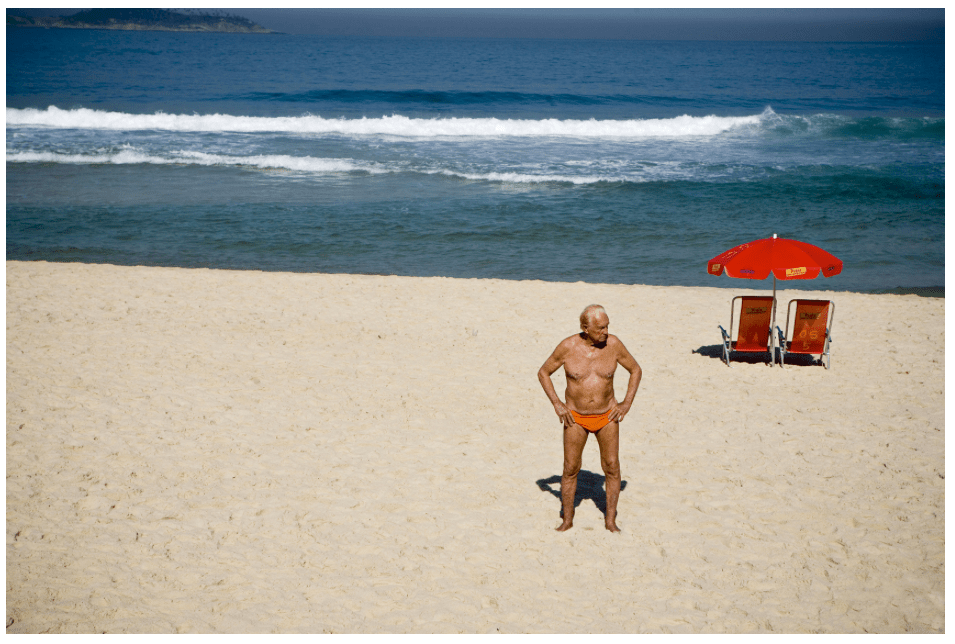
As part of my practice I have travelled well and produced travelogues of around 45 cities worldwide.On revisiting these images I realise that I have naturally and possibly unintetionally but all the same avoided the stereotypical imagery as portrayed in National Geographic I once so dearly wanted to shoot.Whilst I still see some aesthetic similarity in the colours it is rooted very much in the vernacular and banal and has more in common with the work of Stephen Shore than Steve McCurry.
By the very nature of its context which is to help illustrate a CD sleeves art work It’s intent is not to show the picture postcard image of the city but to try to show the ordinary with humour and curiosity to show the underbelly, the other but not necessarily in gritty photojournalistic way, somewhere in between.Even the the covers which depict the DJ/artist only give a hint as to where the album is based from on very few if any would it show an obvious landmark.
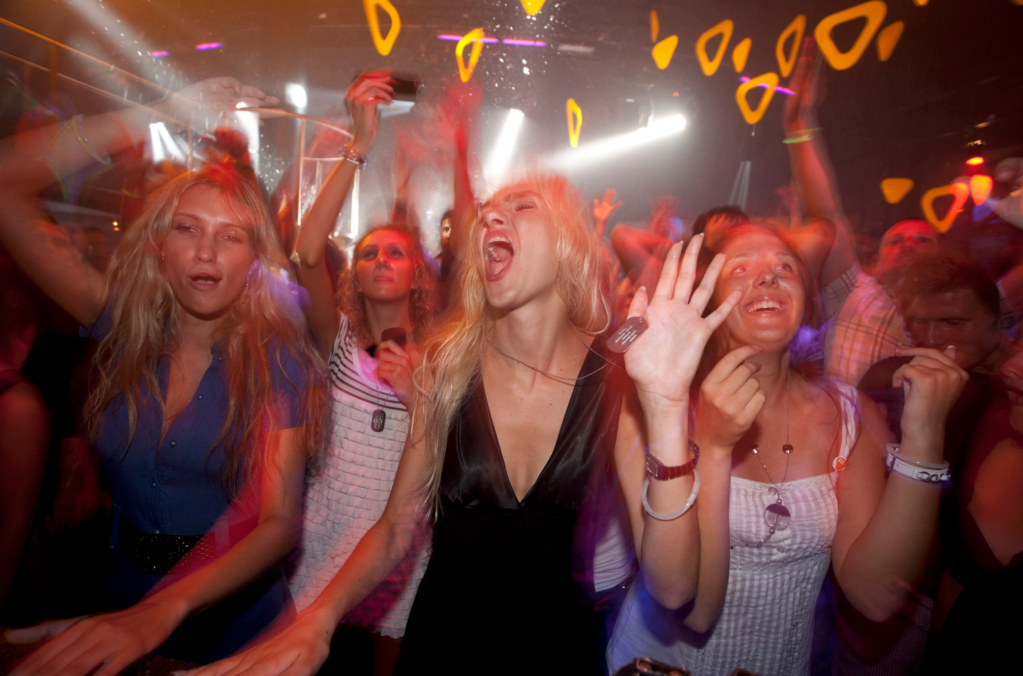
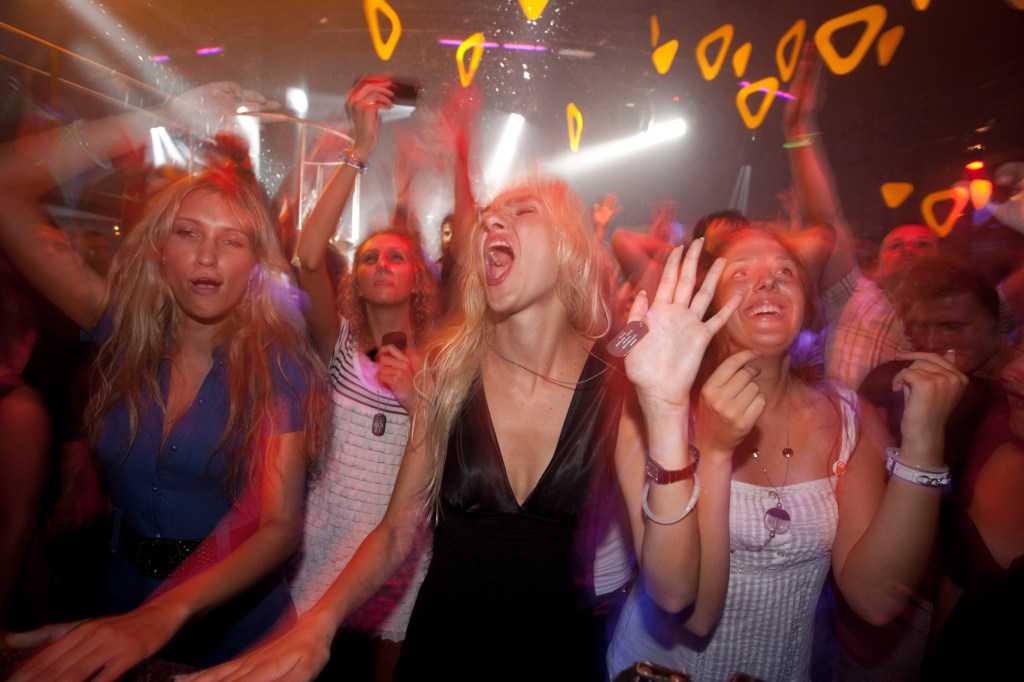
Within this context I do have to consider the power I have as a photographer both with the viewers and the subject matter.I often shoot people on the street and most will know I am taking there picture however not all will know the end product or context.I have to consider this when taking the picture and also when passing on my edit to my end client. As part of this same project I photograph people have a great time in situations where there behaviour is not there normal everyday state, in nightclubs and festivals where they are often reaching euphoric states sometime intoxicated, often in outlandish clothes, sometimes even little in the way of clothes and whilst in the moment they play to the camera and are aware they may live in a situation outside of this context where this behaviour is less acceptable and they do not want to be shown this way.
Now whilst everybody is made aware of my presence and legally the images can be used my own ideologies have to come into play as to where this power is used and how.
I’m representing a moment in time that is fun, outrageous at times and most often I’m asked to make sure “they”make it into the artwork,I have no control over this part from withholding images in the supplied edit but I often have to think how will that look in 5 years time how will they feel about that then so whilst I have a lowish barrier one does exist that I do not cross in thus context.
This module has been my favourite so far I have a lot of writing to catch up on and the topics covered are providing us with plenty of material to digest and discuss, maybe a bit overwhelming but none the less fabulous.
Today we had a “bonus lecture” discussing the everyday and banal, we discussed how often overlooked subjects or objects even in the vernacular become important and valid by the the act of seeing and more importantly by the act of being photographed.
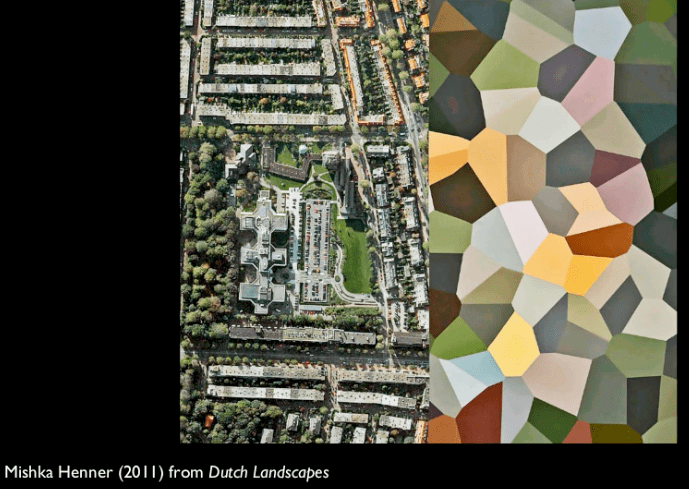
In its broadest sense we can look at the work of Eadweard Muybridge who’s images could only have given us that vision via the camera, his images of horses running for example was a new view on a familiar subject that actually painters had been getting wrong.Google Earth is another area where the familiar is viewed in a new way that only through the lens of a camera we see a version of the vernacular.
These are of course quite extreme examples and in this post I hope to explore the other end of the spectrum and some of the work in between the two.
Learning a new language around photography and photographies as been amazingly interesting to me and as a practitioner of over 30 years in photography to learn so much really excites me.It certainly as helped question my approach within my own practice which is traditional in as much as it is very much camera/lens based.
In discussing what photography is we looked at the Modernist perspective through the work of John Szarkowski and Steven Shore and there respective essays The Photographers Eye and The Nature of Photographs we then took a look a very different look via Carol Squires who curated the exhibition What is a Photograph at the ICA New York in 2014 in which we explore less traditional methods and ways of using photography, some of which was non lens based mixing painting and Sculpture along side more experimental techniques that I will touch upon whilst discussing the opposing ideologies.
When we talk about photography as seen through the eyes of Szarkowski who concentrates more on the photographer,whereas Shore places his emphasis on the photograph, print ant its own life as it enters into the world.
Both discuss very valid arguments that in my opinion are equally important in the process of image making, the intent and the context in which they are viewed.
Interestingly Szarkowski places much importance to the eye of the photographer and the intent by physical means and choices the photographer makes, he divides these up into 5 subject areas . The first being the Thing ie the subject matter the indexical trace of the real thing but not actually the real thing, its a trace ,a representation if the real thing as seen through the eye of the author/photographer,it is only possible to capture a small part of the Thing,a fragment in his words The Detail which in its self is only part of the whole story again controlled by the photographers intent,images that attempt a narrative arguably have more in common with painting and the painters eye as they tend to be a total construct where everything is created to the internet of the photographer and go against the Szarkowski’s theory. He was not convinced by the Tableau of Henry Robinson,but would in my opinion be hard pressed to argue the same case against the modern equivalents such as Gregory Crewsden who’s modern techniques owe as much to film making as painting to build a convincing narrative. Below are examples of Henry Robinson,Crewsden and also the photographer Red Saunders who unlike Crewsden,who shoots much of his work in camera with elaborate sets and lighting,Red uses the modern equivelant of the cut up negatives of the Victorian tableau, he uses 40-50 plates or separate images to build his images all drawn and shot listed to the final detail. I’ve also added one of my own attempts drawing on the all three photographers in my project exploring the emotion around music.
Moving on he talks about the frame and how that selection has to be made by the photographer, how the scene continues on beyond the four edges of the frame and the photographer has to make that choice as to what it is he/she intends us to see, again arguably that is not the case in the constructs around the work of Crewsdens set built images but would be with the images he shoots on location, despite such huge amounts of research the very nature would mean some form of compromise that he would have to decide on in where he put the frame edges.
Time is the next important area discussed, the decision of when to press the button being the precise time the photographer feels all the elements of scene are in balance and the image becomes a picture, much like when Henri Cartier Bresson talks about the desire moment, to me this seems the most obvious element but also one of the hardest to acheive,often requiring the experience of forethought and planning and of course in some cases patience, miss it and its gone.It’s probably the element most out of the control of the photographer.
Szarkowski talks at length about the language of photography, how we interpret time and have learnt to read photographs using such techniques as blurring to allude to motion, it’s interesting and something as viewers we have had to learn from scratch.Other areas and one of Szarkowskis other areas he breaks his theory into is the Vantage point.We as photographers have to place ourselves in the best vantage point in order to find the Thing,maybe move slightly to find the Detail and Frame accordingly, we certainly need to be in the right place to anticipate the correct time to shoot, for example, put simply if we are shooting a alleyway with a the perfect light but want some human element in silhouette we need to be in the right spot to anticipate the time that person walks into that perfect spot.
All images are of course constructed in some way or another either by the means of technical constraints,circumstances and what the photographer and to a lesser sense what the viewer decides to include either by cropping or adding.
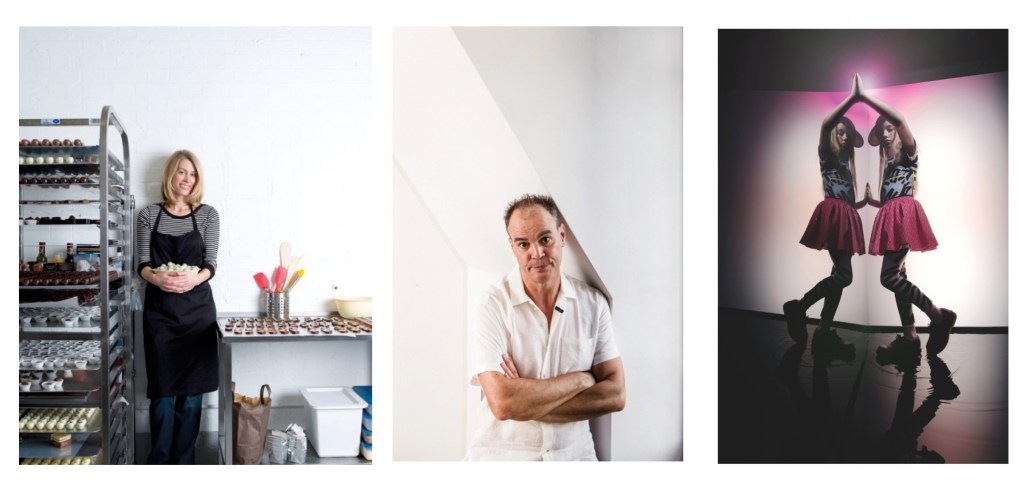
Below are 3 simple examples from my commercial practice Illustrating the use of construct to convey the message from left to right the first one is quite obviously a chocolatier shot for a magazine with no doubt as to what it is she does for a living, in this instance it was quite simply my job to do show this in very basic terms using a construct of her wares and friendly smile.The middle one is of a well known author with whom I wanted to capture ,ore about his personality, I could have put him in front of a book shelf full of books but that could be construed as rather lazy and not a true portrait. I was under time pressure and had only the choice of the bookshelf or this tight alcove and chose this. I knew I could create tension, he is a writer of thrillers and whilst is perfectly pleasant as a sharp reputation, I wanted to get this across in the image and use this simple tool to do it.
On this note I have often heard amongst more technical photographers how the work of David Bailey and Avedon is simple, well I would say yes technically it is but strip away any clues,construct or context such as in image number 1 and it really is not quite as simple to create a strong portrait.
The image on the right is pure construct and make believe from the simple set to the clothes and attitude of the actor/model, all constructed to create the final image of pure make believe in reality it’s a small set within a studio with artificial lighting and a child who in real life is a joy to be around …
Are we not all Voyeurs to certain and differing extents ? Not as suggested in a sexually deviant way but as humans most people have some sort of enquiring mind.
As a photographer I would say I am most definitely, in fact my entire practice as been based (without realising at first) the notion around other peoples story.In my own practice I have spent most days finding out about other peoples story through my work as portrait photographer and now through my MA research into landscape. My gaze does not come from a point of judgement I am genuinely interested in how other people get to the point they are in their lives,whether it is someone well known or not I think we all have a fascinating and different story to tell.
Whilst I say I do not come at it judgementally I have to admit I do sometimes come to subject with preconceived ideas, maybe based on something I have read, public opinion,stereotype or of course on occasion my own formed opinion based on conventions and cultural upbringing, this will all inform the portrait and whilst the sitter may have one idea of how they see themselves (Freuds Id and super ego theory) I may have another.
This is the point where I have to be careful as a photographer to make my decision on where I set my gaze.
I am very aware in this position I wield the power and decision making process as to how the person will be portrayed by the viewer and here in lies the problem at least sometimes.Whilst almost every photograph I take is with the knowledge and collaboration of the subject therefore ridding the shot of the “other” they are not always aware with what context these images will be viewed so reintroducing the objectivity.
The context is paramount in the intent and the viewers subjectivity will change accordingly.For example I have shot many travelogues in many cities, in the context of the travelogue the image appears alongside many others to tell the story of the city.Singulary shown it could be seen as exploitative.
Susan Sontag (who seemed to have problem with everyone) certainly did not like the work and approach of Diane Arbus who’s work can be a little difficult at times and could certainly be seen as confrontational and possibly exploitative especially when it comes to her work with the kids she photographed with learning difficulties and Downs Syndrome. I think maybe because Diane Arbus had a reputation for photographing outsiders and what she herself called the freaks Susan Sontag lumped this body of work with the Downs kids in with that, it’s perfectly conceivable and maybe Diane Arbus did just see it as another branch of her work about people on the fringes of society, it’s true this generalisation is not healthy and now days thankfully we are able to distinguish the differences and act upon them but her intentions were always honest and thought provoking in a time when much of these subjects were being ignored and awareness was not high. I would argue it was Susan Sontag’s prejudices that were at fault in this case.
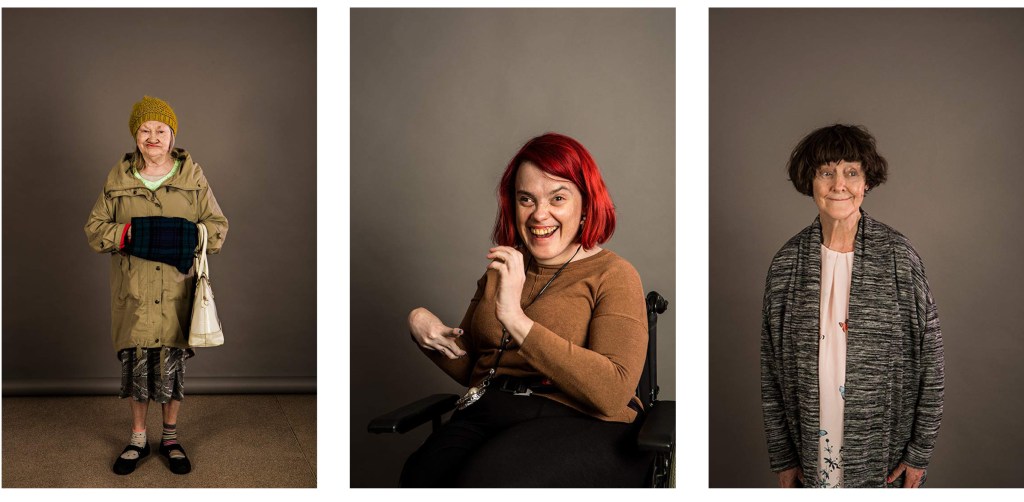
Below are some examples of work I have shot in collaboartion with a charity who work with people with Autism and learning difficulties. I spent a year on and off photographing around 200 people who live in care, the carers and people within the communities they live.The project was called Self and the idea was to help both the sitters and the wider community to question how they see themselves and others within the community.Done through exhibitions and workshops it’s aim was to raise awareness of the discrimination and of course lack of funding.
I did plan to shoot individuals in the rooms they live in with all there personality indicators to give context but decided in the end that a plain and simple background all the same would equalise/neutralise the subject and allow the personality of the sitter to shine through without distraction.I know where my gaze is firmly set with set of images but I have of course had my doubts a to what other viewers may think of my intent outside of the context of the exhibitions etc…..what do you think.
My practice for the past 30 years sits squarely within a commercial context,in as much as whilst I have shot much work that I would class as personal the ideas would often be formed with my commercial practice in mind.Whilst I have been commissioned to shoot many images to brief I have been lucky to have a very free reign with the majority. By working in an Editorial field I have most often been sent to interpret the shoot as I see.Mostly shooting portraits I would always have to consider the intent ie Illustrate a written story and context ,in most cases for a weekly or monthly magazine aimed at a specific audience and whilst I have been able to produce interesting work within those constraints it is non the less always with the context and intent in mind. If time and sitter allow I would always try to shoot something for “myself” which would not be indexed for use in the magazine but for my own intent that may or may not have already been decided.Sometimes if I have shone the picture editor these they have on occasion been used in preference to the indended shots.
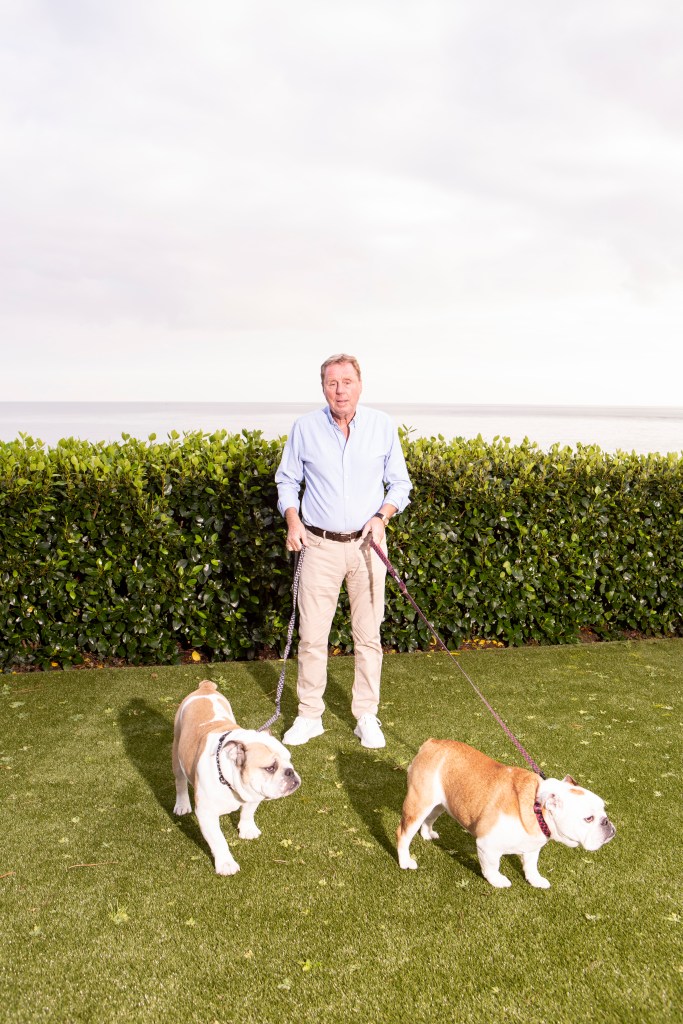
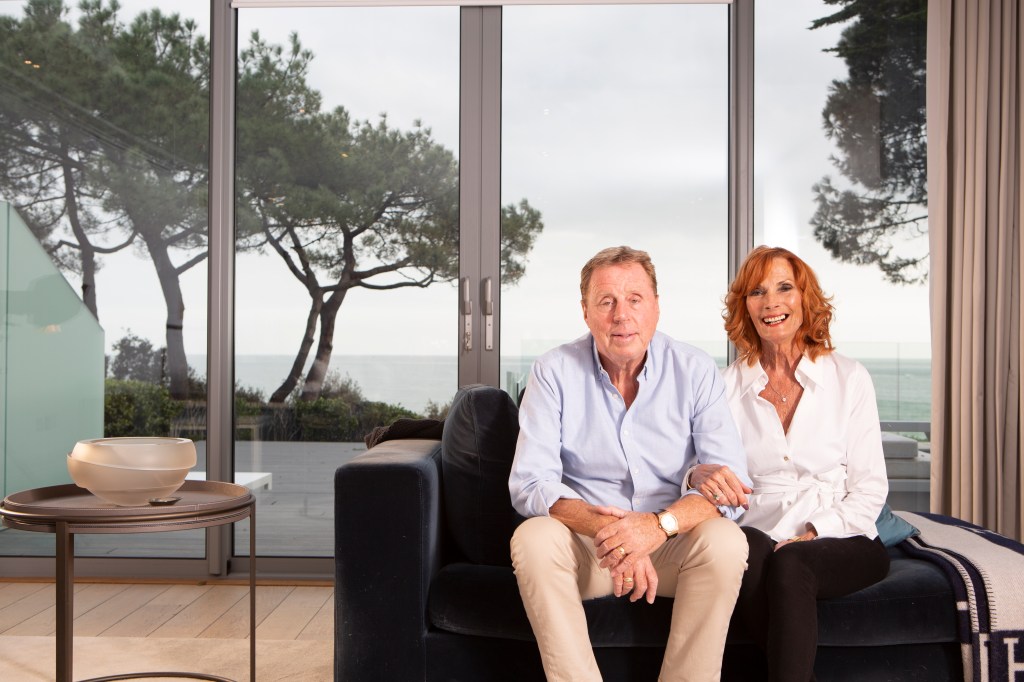
This is a good example of an image that I shot recently whilst shooting for ITV that was shot at the end of the session primarily with my interests and intent in minds it goes ITV have used this image too as whilst it was not part of the brief it was something that satisfied their intent alongside the images I did shoot to brief.
And here is one of the images shot to brief…also used by ITV to advertise the show
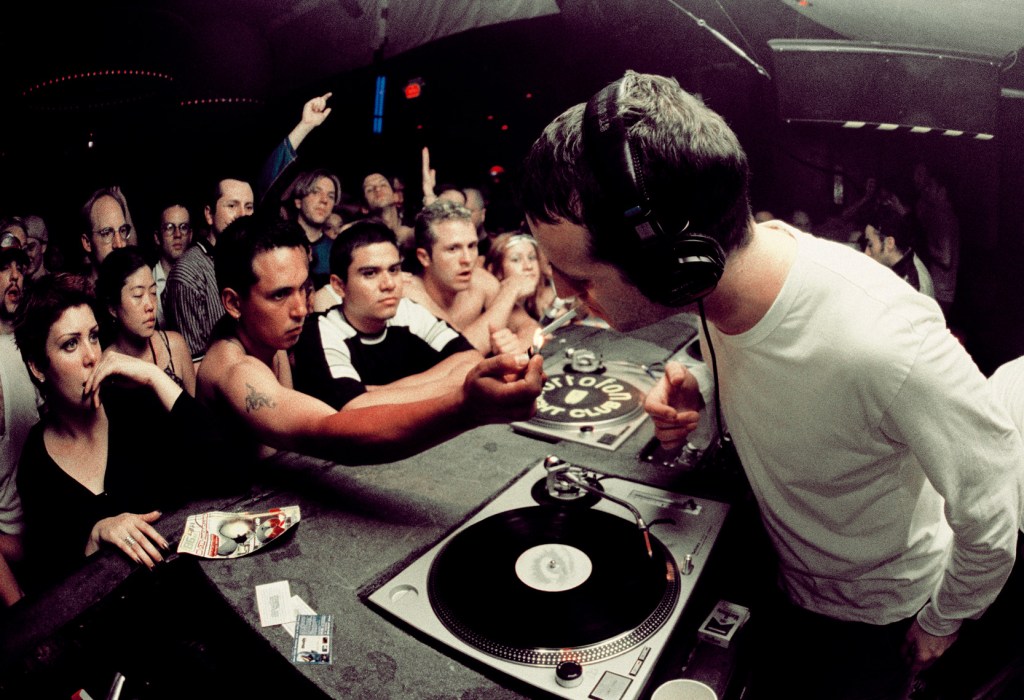
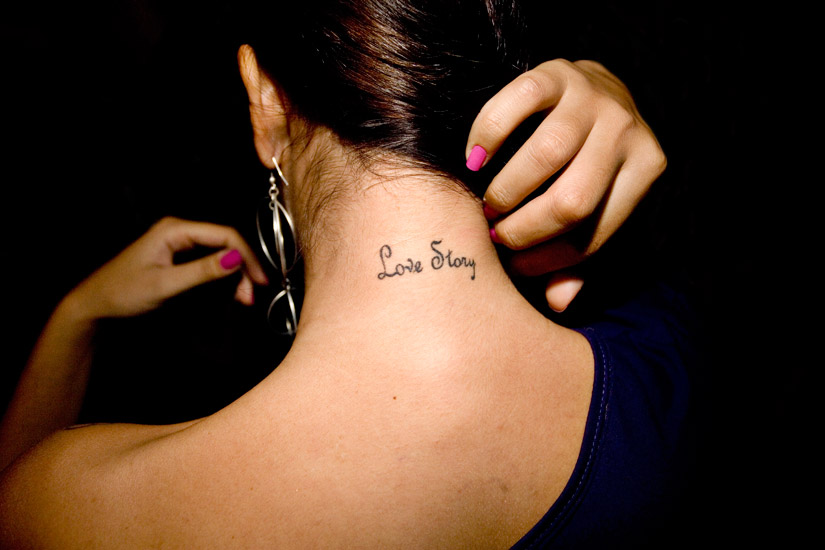
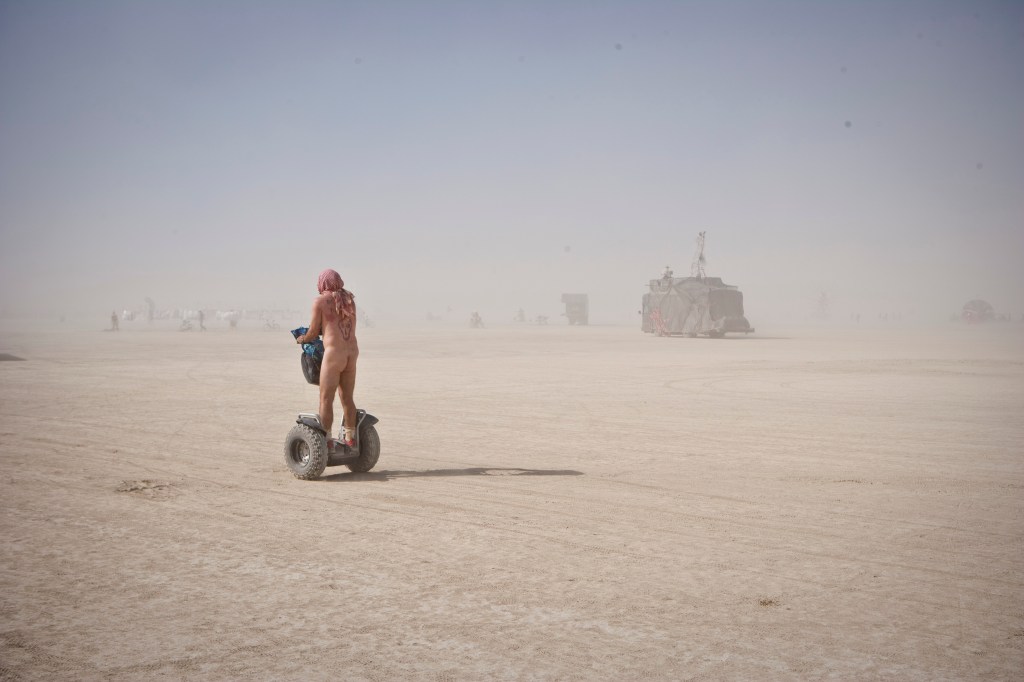
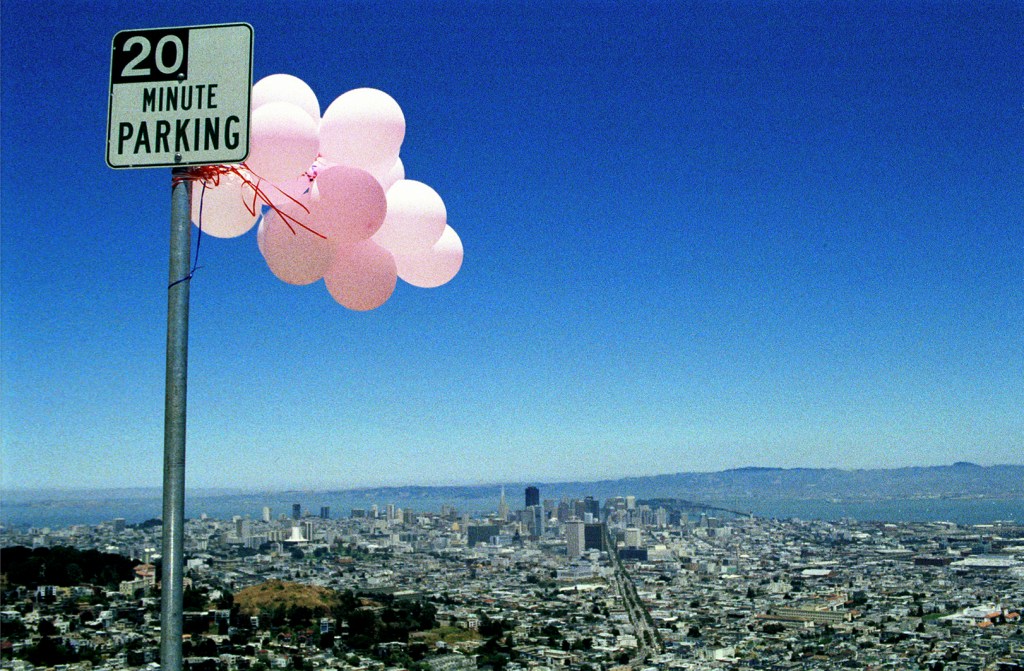
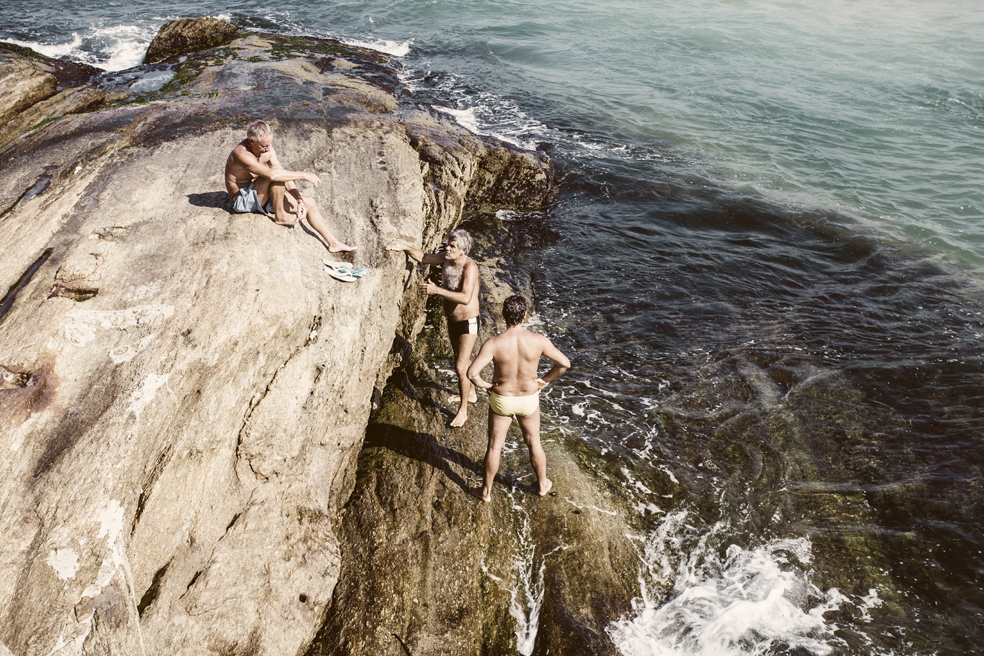
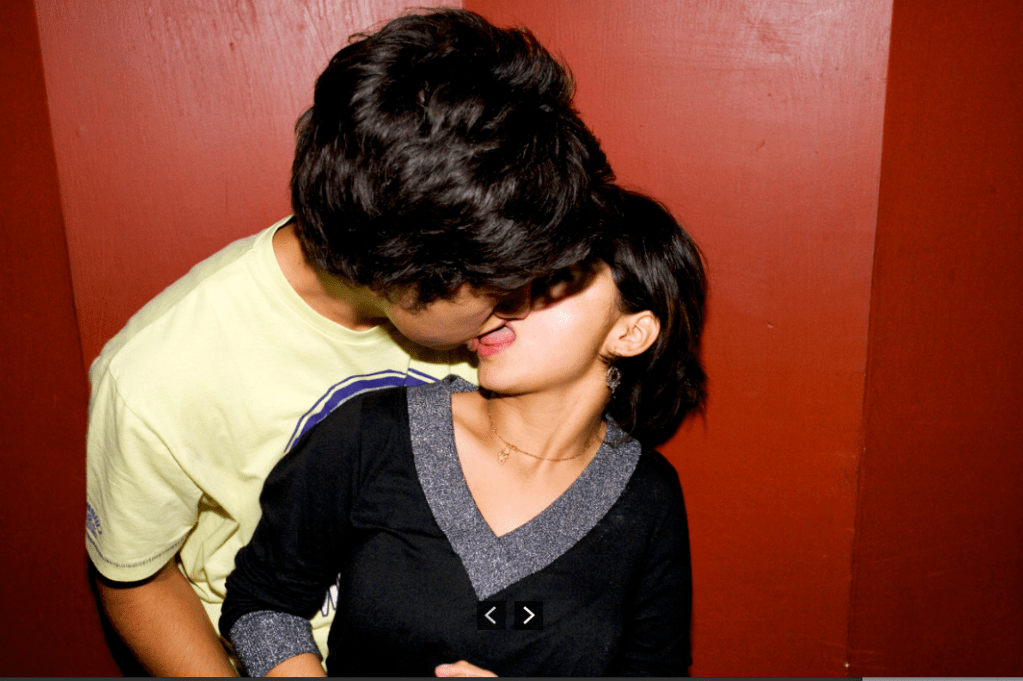
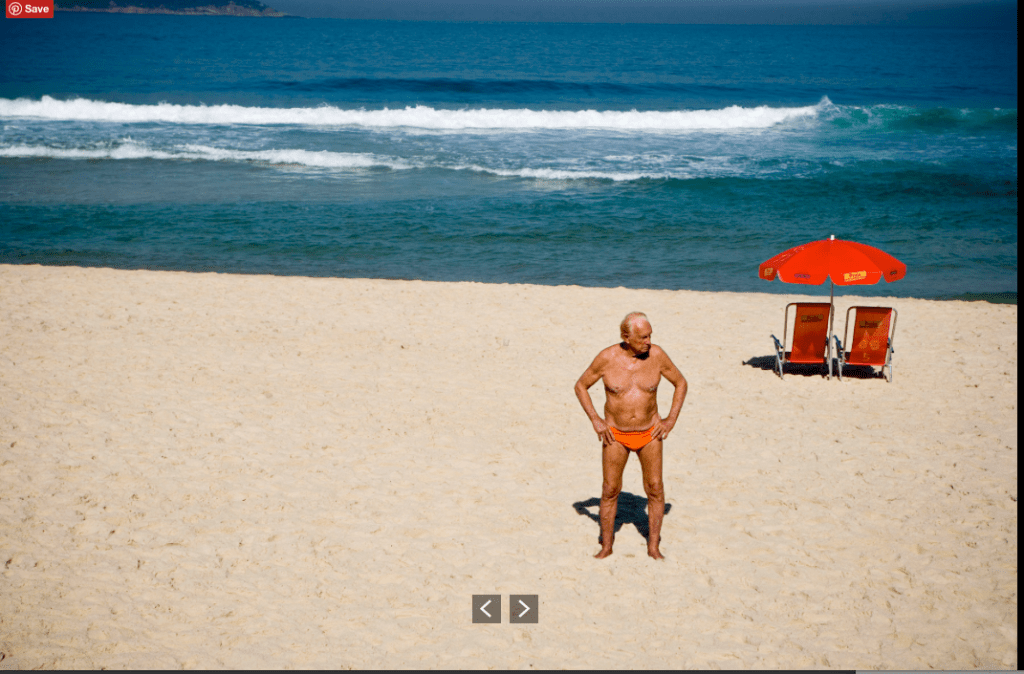
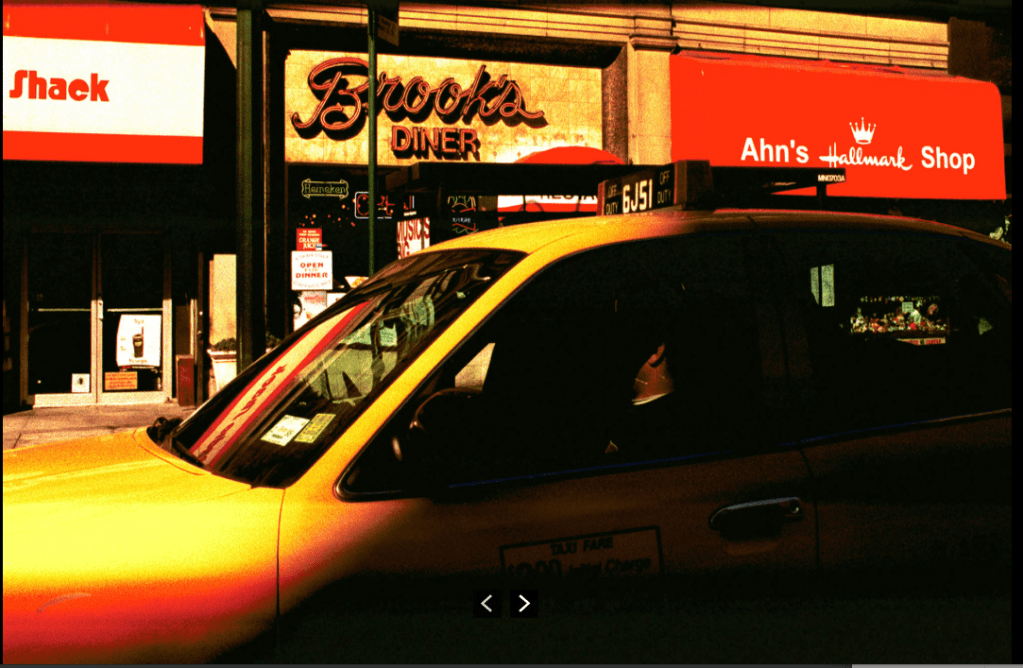
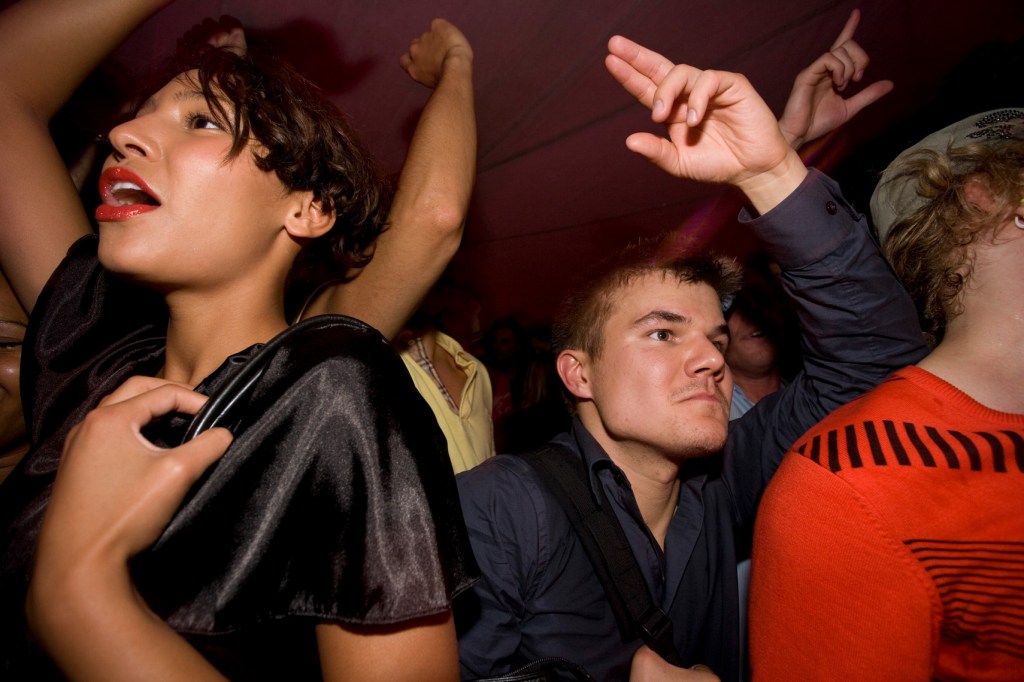
A very good example of work that has a context and and intent that also had a very free brief but as since been constrained by its own success is work I do with a record company called Global Underground. Work spanning over 20 years they originally came to me to help shoot and set a look, the brief was as I say very free but there was a context in which it had to be shown and fill, in this case a very elaborate piece of packaging incorporating a photobook as well as the music and an intention this case to inform the music but also create a sense of being there on the journey and adventure as we travelled the world with the Djs and fellow clubbers.This free brief by it’s nature of success mean’s that now that brief whilst remaining the same is no longer free as it now has to fulfil the same repetitive formula.
A result of this means my work does cross over into books and exhibitions and of course social media use. It certainly does affect the way my practice is viewed and that is a result of decisions I have made to steer people this way and create a brand that encourages them to commission me to shoot for them.Recently that as changed with more and more emphasis being placed on my personal work.
A small selection of the free brief whilst working with GU



 DEAN BELCHER CRITICAL RESEARCH JOURNAL