
Category: PHO704:Coursework
A406/Guidebooks and maps as art.
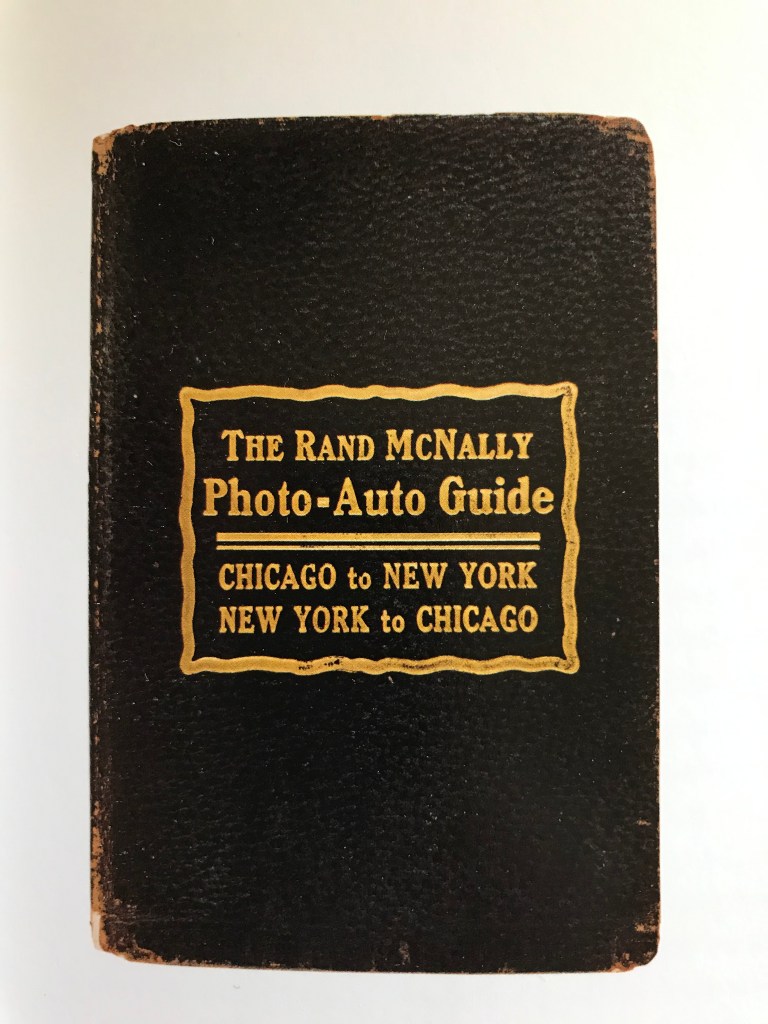
Before Google maps,A to Z’s and AA road maps, even before there were many roads and certainly before any signage and road names the new found car owners could use the Rand McNally Photo-Auto guide launched in 1906 to guide them. Essentially a series of photographs taken from the point of view of the driver with added text describing landmarks and juncture at which to turn left,right or straight on it could easily be described as a precursor to Google Street View and early use of the camera as a tool to aid motoring.Not unlike Google maps/street view it also suffered with the lack of updates only in the case of the Rand Mcnally these changes were far to rapid for it to ever catch up and so became redundant very quickly. Like Google Street View though these books have become a kind of work of art of their own.
In the case of Google many artists have used it within their work.One such contemporary artist is Doug Rickard who scours Google Street Map looking for unusual scenes and scenarios often taking place at junctions,much the way many artists in the past might have done in the “real” world from the windows of moving cars .
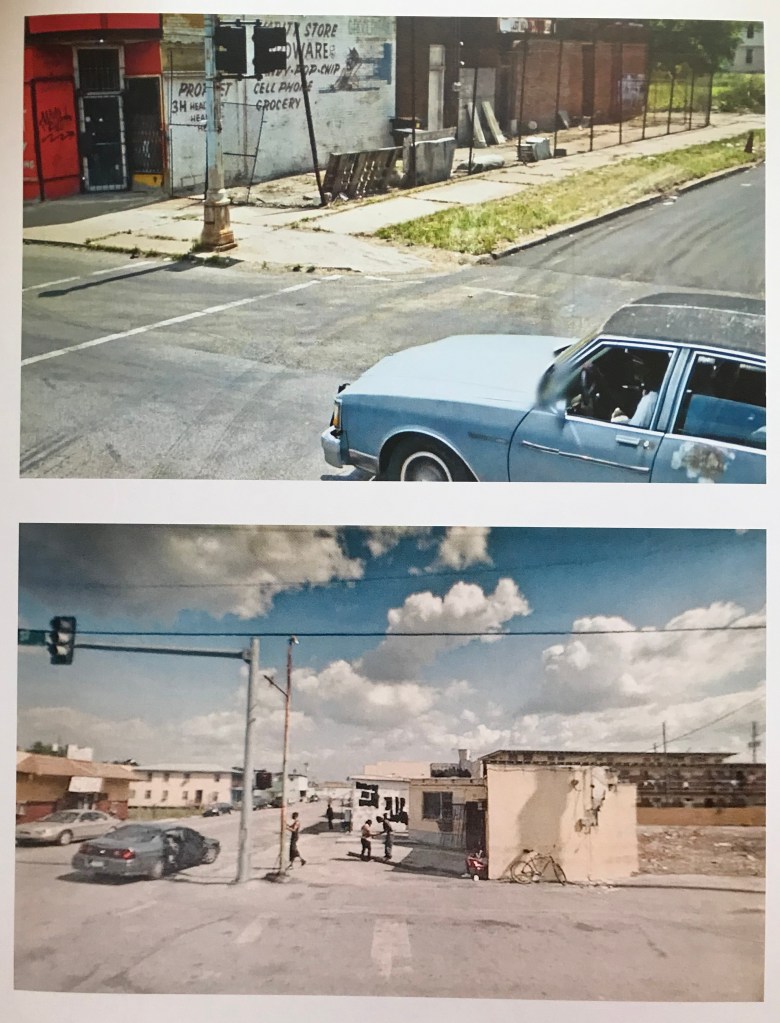
Rickard makes good use of Google’s image library to virtually explore the roads of America looking for forgotten, economically devastated, and abandoned places. After locating and composing these scenes of urban and rural decay, Rickard re-photographed the images on the computer screen with 35mm camera then represents them as part of a new form of document
The low-resolution images that Rickard favours have a dissolved, painterly effect, and sometimes have people in them,some of whom are aware of the camera but are of course anonymous and blurred,adding another layer of almost surrealistic isolation.
Rickard’s work knowingly references traditional American photographers such as Walker Evans, Robert Frank and Stephen Shore and whilst he acknowledges them he strives to move the tradition on using new technologies to document a world in which a camera mounted on a moving car can generate evidence of the people and places it is leaving behind. These images present a photographic portrait of the socially disenfranchised and economically powerless, those living an inversion of the American Dream, again exploring the outsiders,the peripheral.
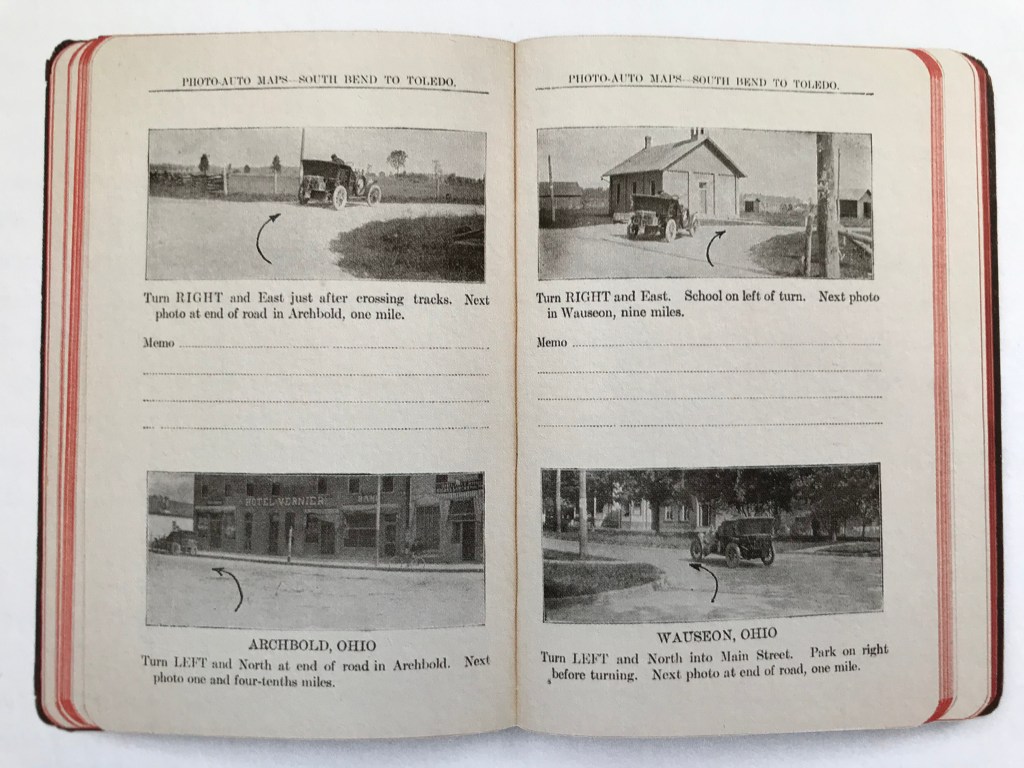
Top: Pages from Rand Mcnally Photo-auto guide New York to Chicago circa 1906
Middle: Front cover of Rand Mcnally Photo-auto guide New York to Chicago circa 1906
Bottom: Doug Rickard from A New American Picture published by White Press/Schaden in 2010
A406/Project influences
Like many I have been a big admirer of Edward Hoppers paintings ,but until recently I was not aware of the work he did in later life.For years his images included the iconography of the road such as petrol stations and diners.In 1962 he painted Roads and Trees,originally in test drawings he included a car but for the final image it was removed as was anything else felt unnecessary.Leaving a calm quietness to the image,there is a slight blurring to the trees creating the feeling of being on the move,a journey.I relate well to this and in all my images so far have endeavoured to pursue the calm and sense of journey all be it without the movement but certainly with out cars or traffic.No mean feat at any time of the day on the A406.
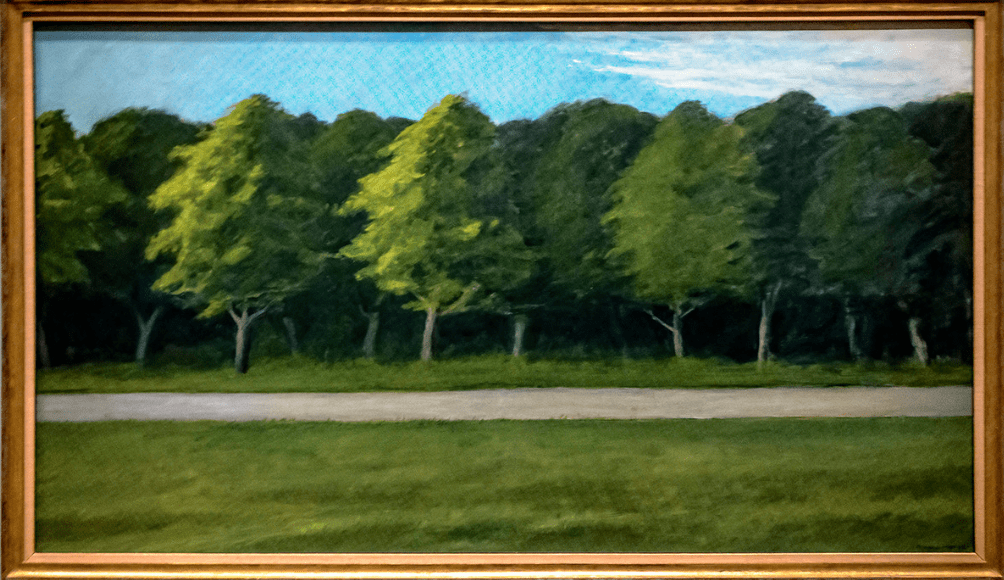
Edward Hopper, Road and trees 1962
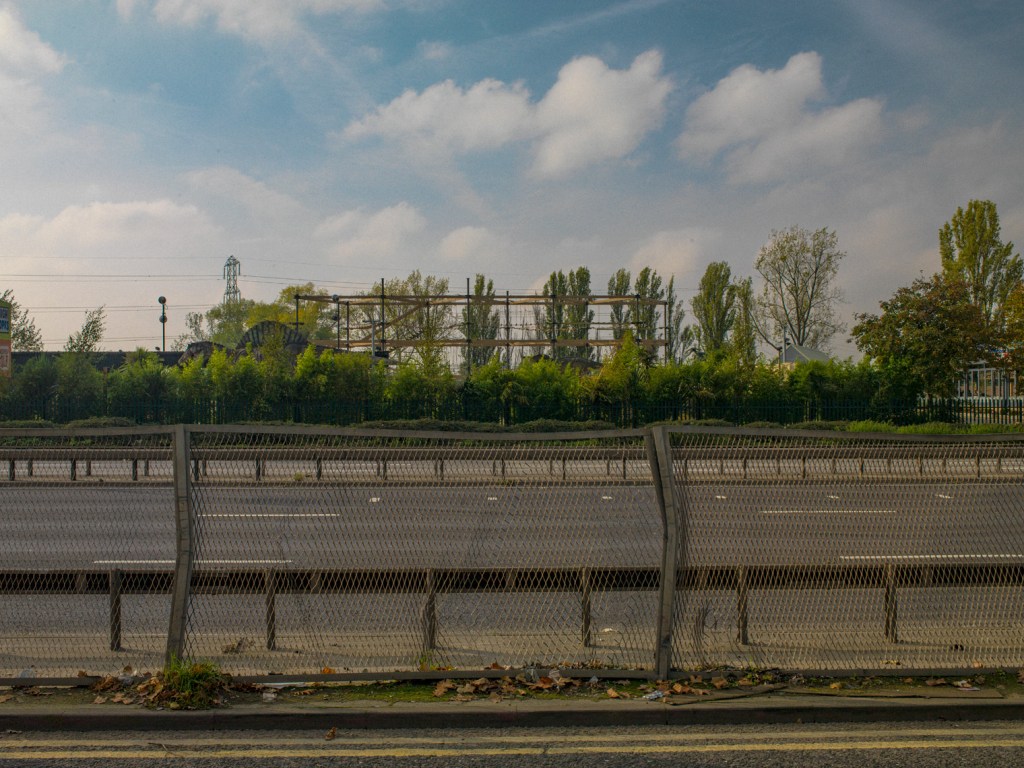
Dinosaurs and crazy golf/ A406 Dean Belcher
New favourite photographer (today anyway)
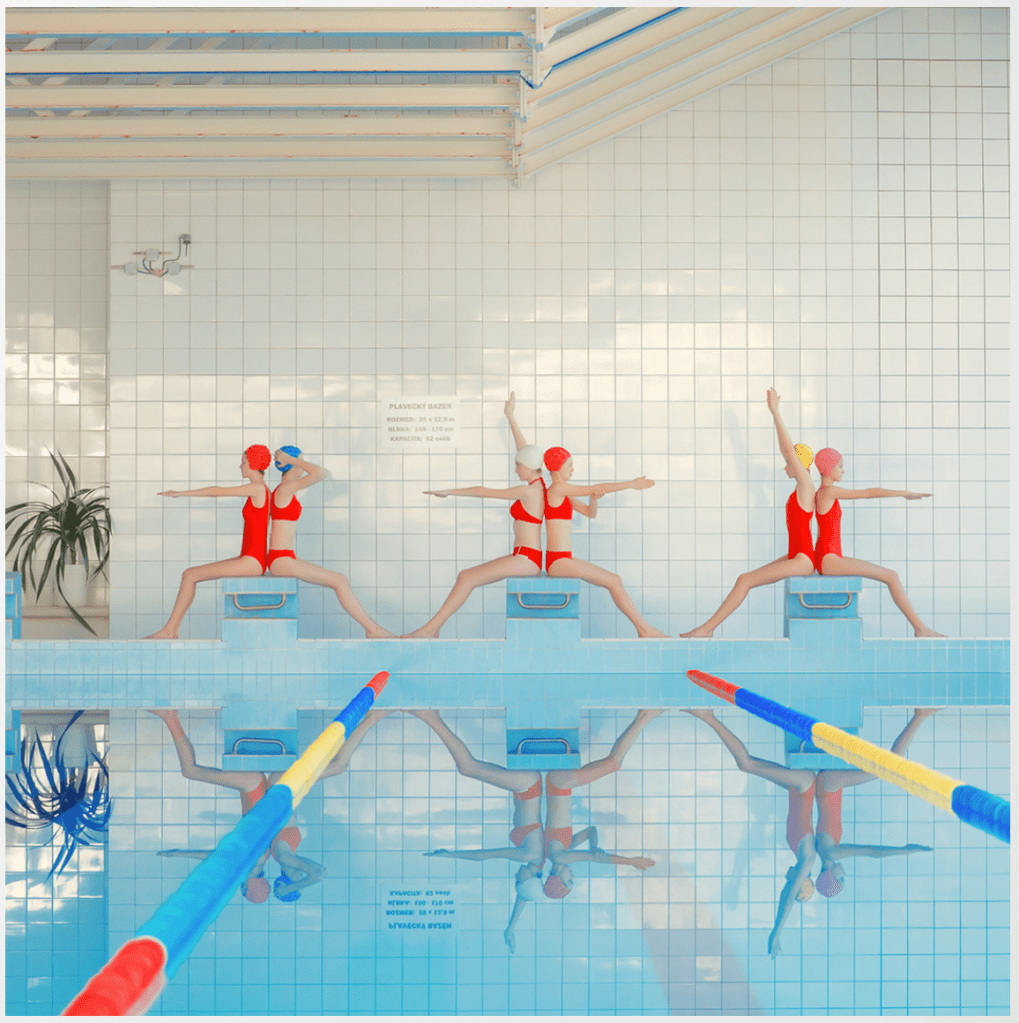
I have caught a glimpse of the work of Maria Svarbova before but for some reason I have not explored further until this week,I highly recommend you take a look at https://www.mariasvarbova.com/ I love the way her commercial work as been able to mimic her personal work so well and goes to prove the point how the close links to personal and commercial work are more important than ever when looking to be commissioned,something we have been discussing as part of this module.
As well as this my particular interest is her exploration of space and how us humans fill it and use it in relation to nature.From an aesthetic point of view I would pick out the the use of repetition via reflections and in some cases in the use of retouching to form and reinforce some of the messages. I like the use of reflections and plan to use something similar.
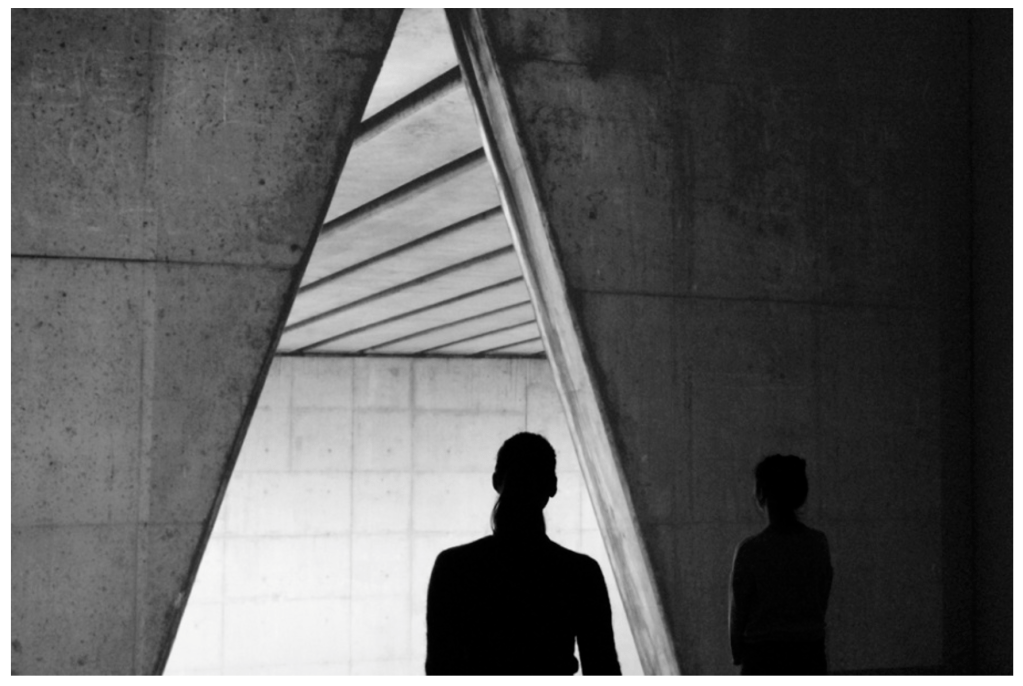
In relation to my own work in general and in particular my latest project A406 I relate well to the use of very graphic composition,the use of lines separating areas creating several points of interest also in my case the use of shadows in her case reflections help fulfil a sense of calm and quietness to both sets of images.
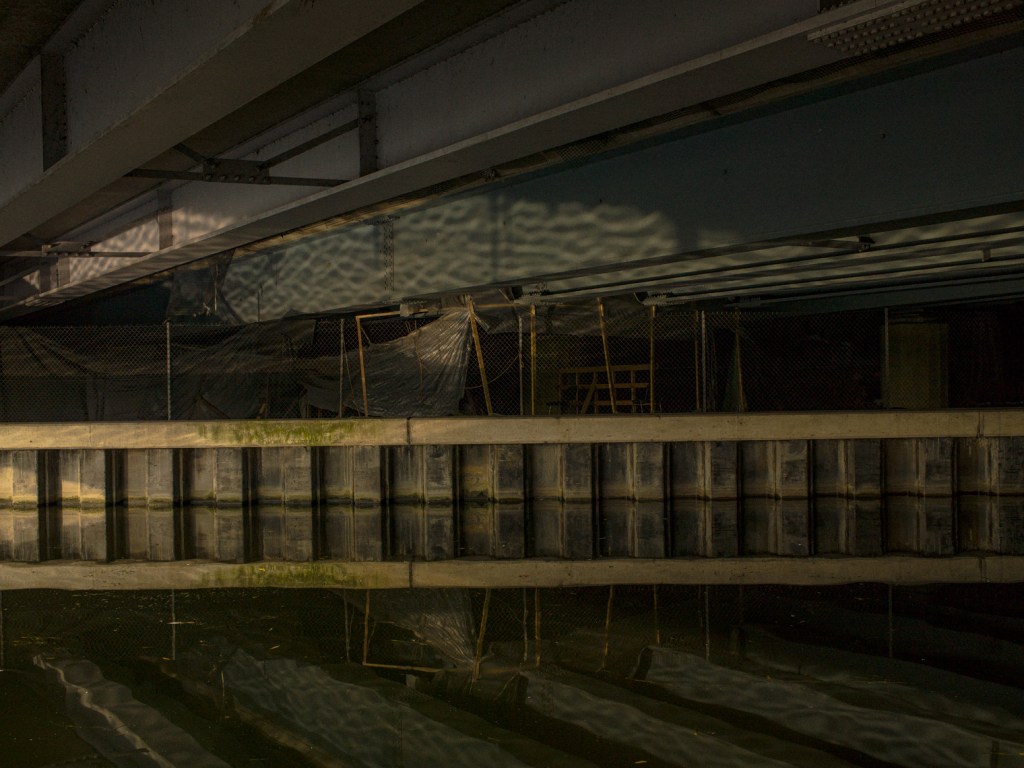
A406/Secret war factory
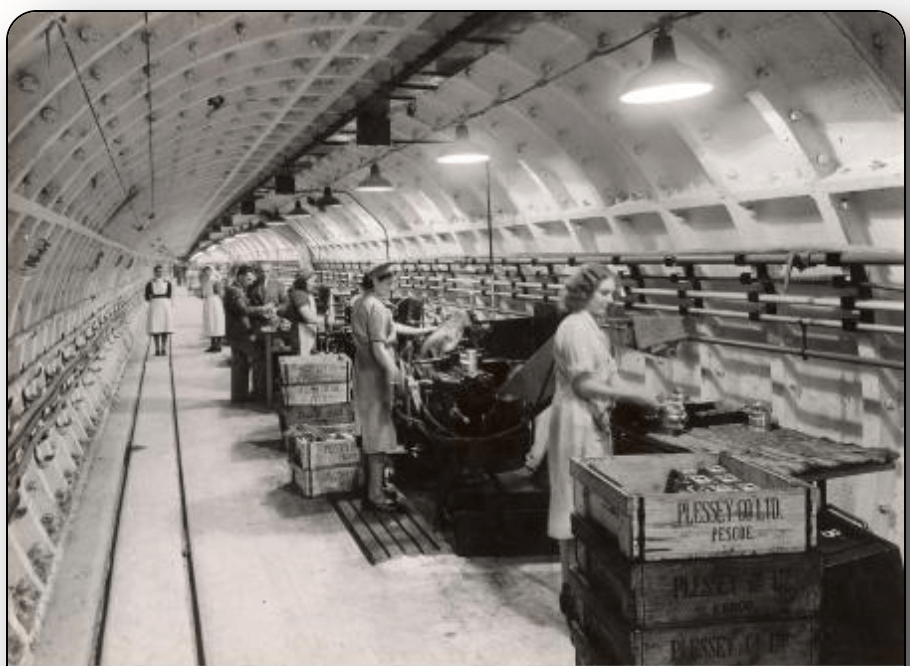
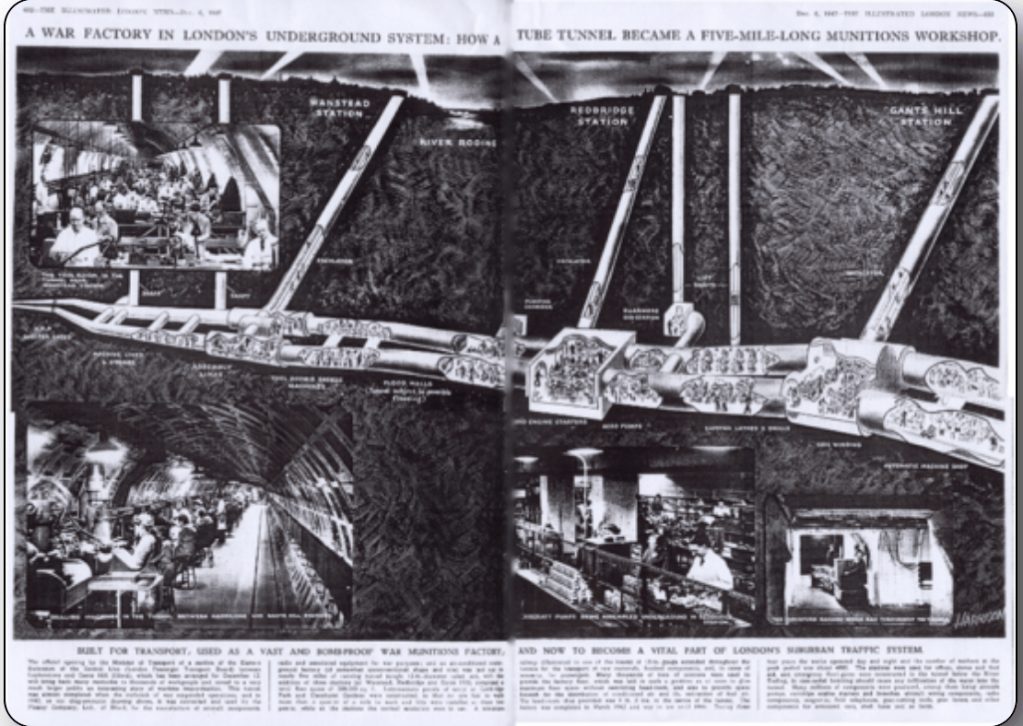
I heard something really interesting on the radio today and partly related to my project.Apparently during the second world war.Plessey who were a big employer in the UK and had a huge factory in Ilford,very close to where the A406 runs today.It was bomb damaged early on in the war and because it was important to the war effort was granted leave to create a factory deep underground in the tunnels that were dug as an extension for the Central line on the London Underground train network,the extension was postponed until the end of the war.
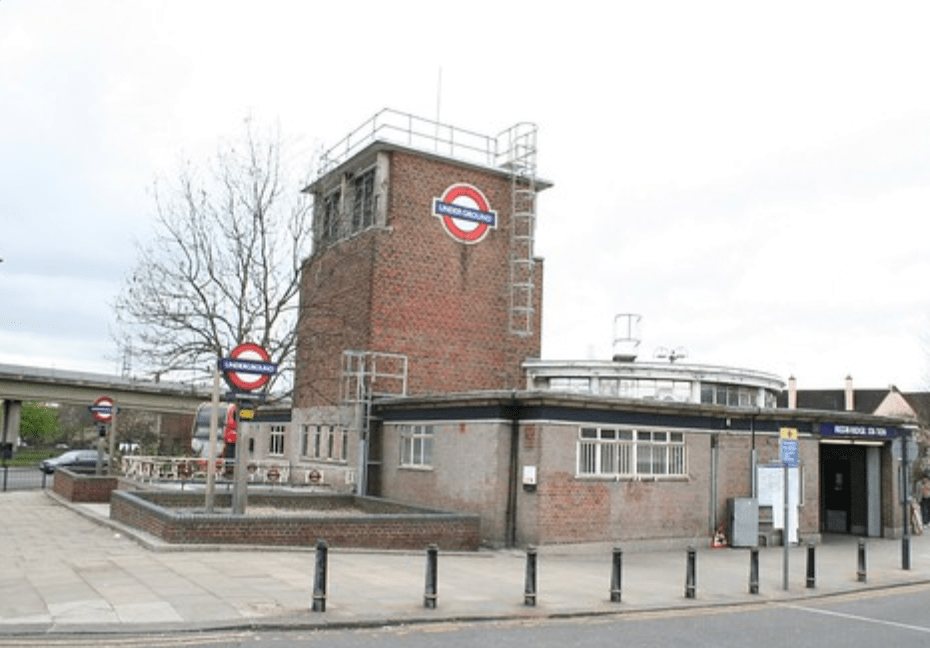
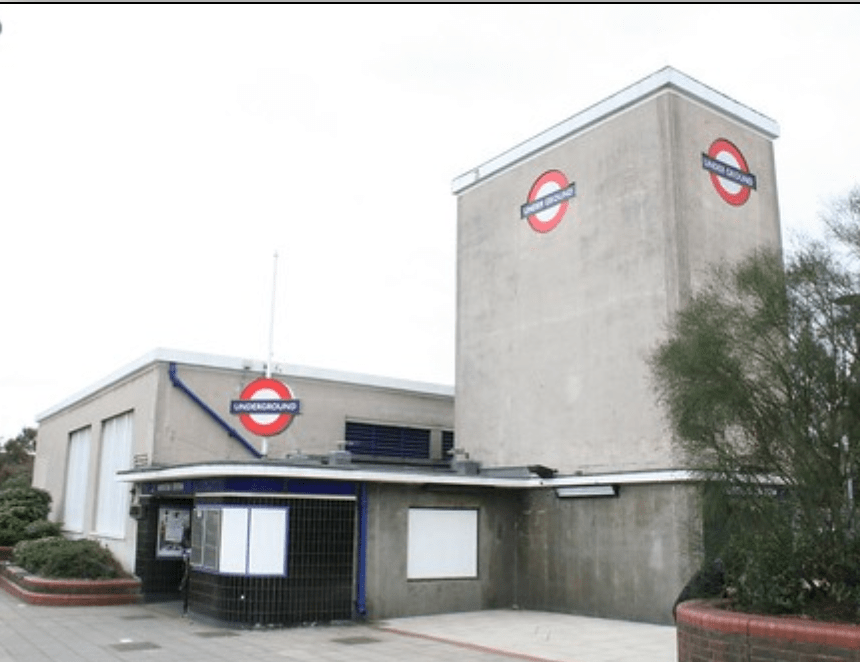
The factory used 3/4 mile of tunnel and the interesting part is that the entrances to the factory were what were to be the underground stations at Gants Hill,Redbridge and Wanstead.There was also several lift and ventilation shafts built along the route,all of which exist to this day.When the A406 flyover was built after the war and Plessey had moved out of the tunnels to make way for the planned extension they tried to knock them down but being tied to a short building schedule and the shafts being made of reinforced concrete they were built around and incorporated into the construction. I’m going to research further,I think it could be interesting and reinforces the historical arguments for keeping essential war work out of the centre of cities,much like the gunpowder mills in Waltham Abbey.
A406/Tales from the night before
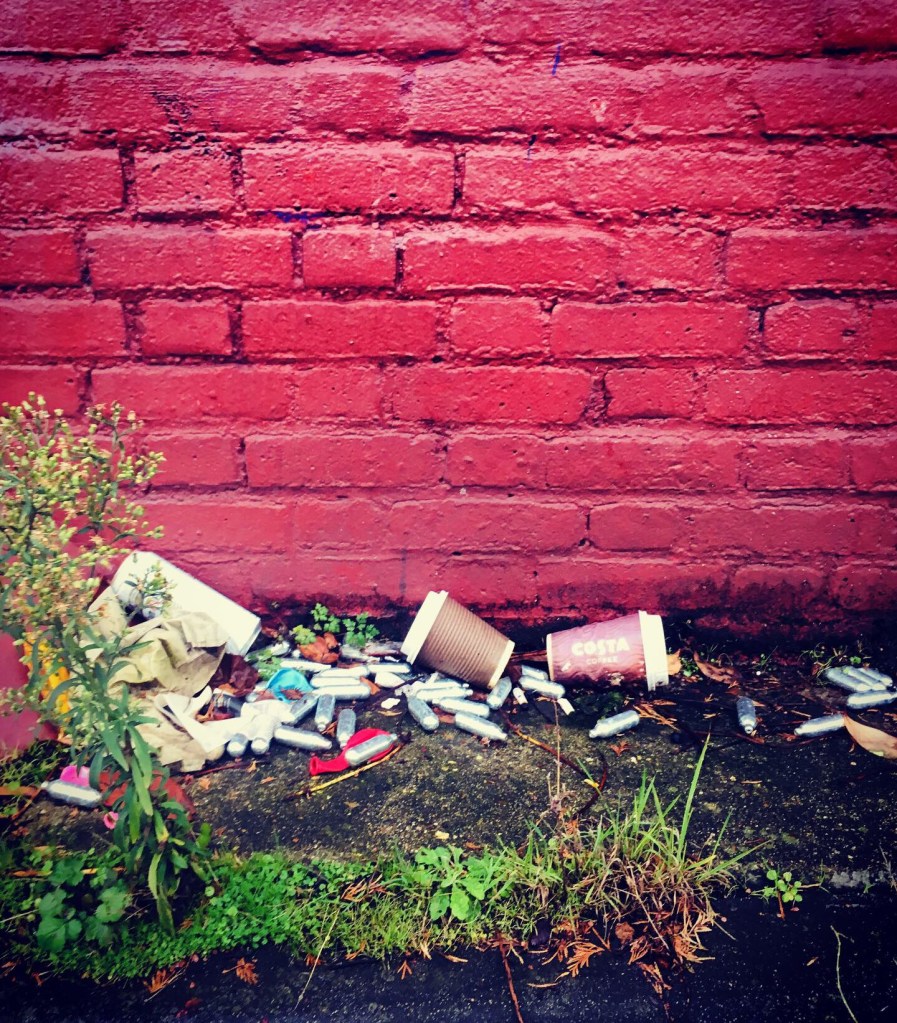
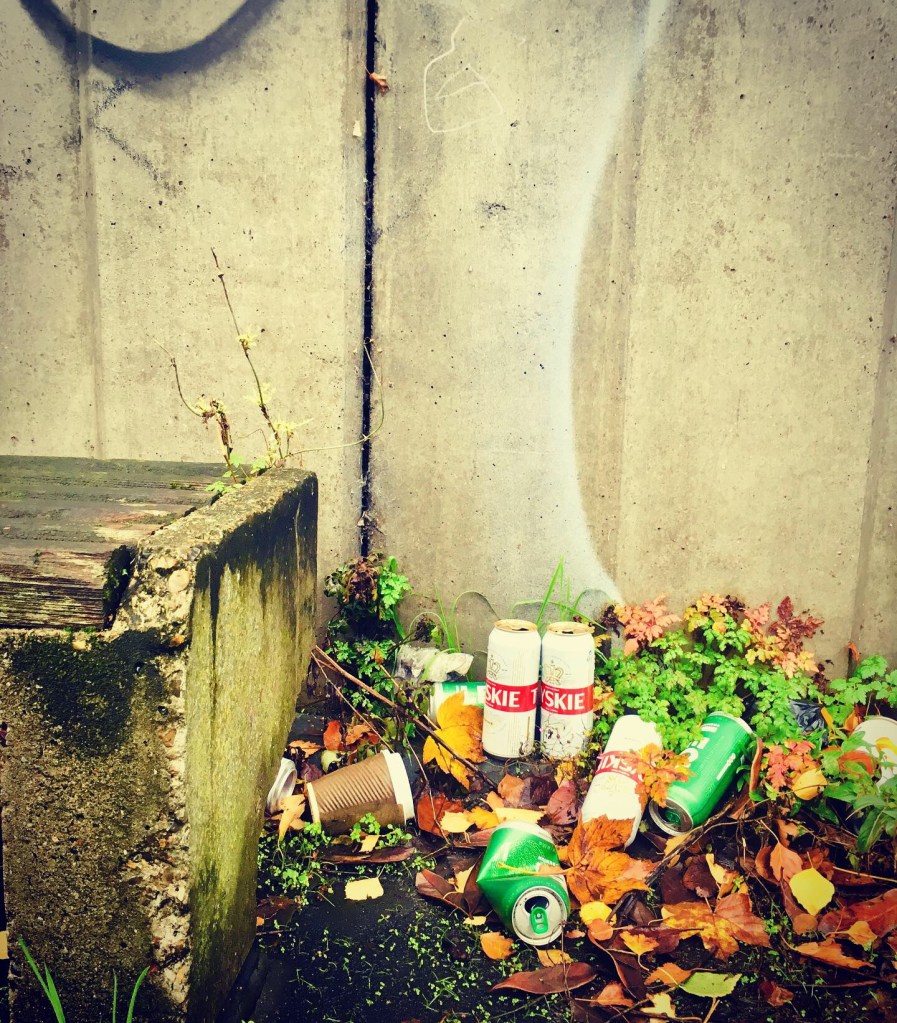
My morning dog walks always reveal something of the night before,depending on the route I take different stories emerge.My route this morning along a depressing path that runs parallel to the A406 ,which as no redeeming feature,just a path that goes from A to B. Despite this it as broken down benches that face out towards the dullest part of the road,just 4 feet from the edge of a 20 metre drop protected only by a single railing (on another note it is sadly a popular spot for suicides).
I often wonder who decides to sit there and party/get high/drunk,why not somewhere just a little nicer.What do they talk about….I think of it as a suburban version of cider drinking in countryside bus shelters.
A 406/Oral history and soundscapes.
At this juncture (see what I did there) having had a few technical issues setting up this CRJ I have manages to copy over many of my posts other’s I am re entering from memory,thankfully from now on that will not be an issue but unfortunately a few will be running out of sync,I hope they will none the less inform and entertain.
Following a recent 1 to 1 with my head tutor Clare she as been encouraging about the start I have made on this project and the direction it is going,we discussed the work of Tim Bowditch and his project Hind land thats explores the dead transient spaces under the bridges and underpasses of the M25 motorway.It resonated well with me partly because we are both looking at the transient space and world around a major artery but also like him he is interested in the sound and as paired up with a sound recordist called Matthew de Kersaint Giraudeu to create these soundscapes to compliment what would be very silent images.Without the sound the images themselves being devoid of life and shot at night look quiet and almost quite tranquil whilst overhead the endless traffic is moving creating beats and whooshes,shown as an installation and whilst I have not seen it in the flesh I can imagine an immersive experience that may not have been possible with the images alone or at least it would have been a totally different experience. I’m very much interested in Oral histories and keen to incorporate soundscape and oral history into my work,this is a great example of the mix of the two media and one I intend to pursue further.From the outset I intended to include an oral history ,(possibly moving image along with the stills,the use of a drone and topography)in the form of short interviews of people I met whilst photographing the locations,this as not come to pass yet but can see it forming part of future modules as the project progresses.I am particulary keen to research and find people who live alongside the A406 and how they feel about it,for instance when it as been extended in the past and cut through communities such as where live.The worries they have with pollution and noise but also the positives of the communities that have built up around it over the past 100 years or so.
With this in mind on practical terms Clare and I decided it was a good idea to create a plan of action to include a shoot schedule and a target to meet regards blogging and recording them.
https://www.timbowditch.com/hind-land/ . https://www.timbowditch.com/exhibitions/
 DEAN BELCHER CRITICAL RESEARCH JOURNAL