Week 5 Fanzines

As part of our studies this module we have been looking at fanzines as a means to give our work a further life and audience.I’m a big fan of fanzines and newspapers as a way of showing work,quick and cheap to produce they have an immediacy and potential collectability.Much as I love photo books (although I’m not too keen on the massive tomes often produced by say Helmut Newton) I like the democratic un-precious vehicle zines provide.

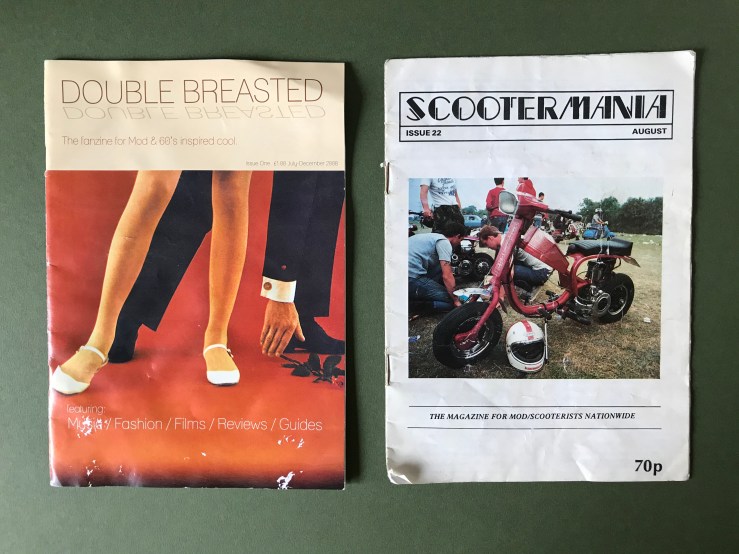
They also have a fantastic history starting out as political pamphlets the word fanzine was first coined in the 1940s by Sci fi fan Louis Russell Chauvenet thought to be an amalgamation of fan and magazine.Finding a real outlet in the 1960s and 70s, many magazines started out as zines being made in small runs ,photocopied and stapled on the kitchen table,magazines like Oz,Timeout and even I.D. all started out this way with many writers and photographers cutting their teeth on them.

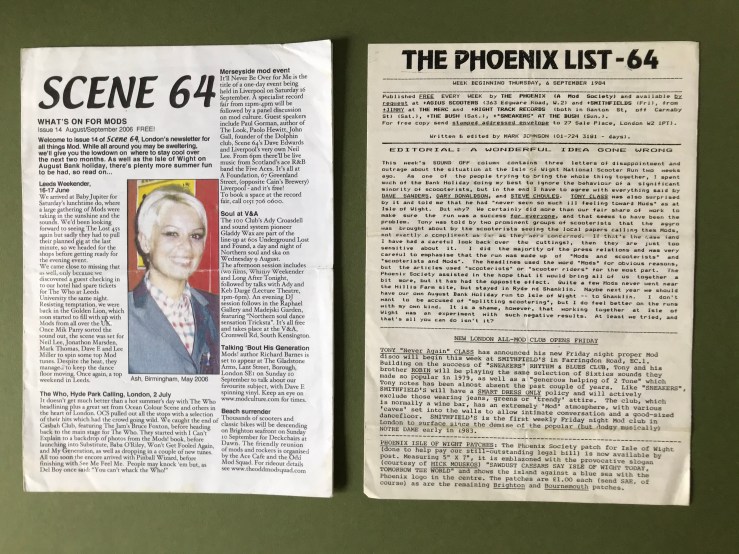
For me personally they were in the early 80s still the main form of finding out information away from the mainstream press.If you were into a certain fashion or sub culture or  perhaps a type of music not covered by mainstream press,fanzines were where you forund out what gigs,clubs and latest fashions were way before the mainstream press took hold.Much like social media is today only way slower.

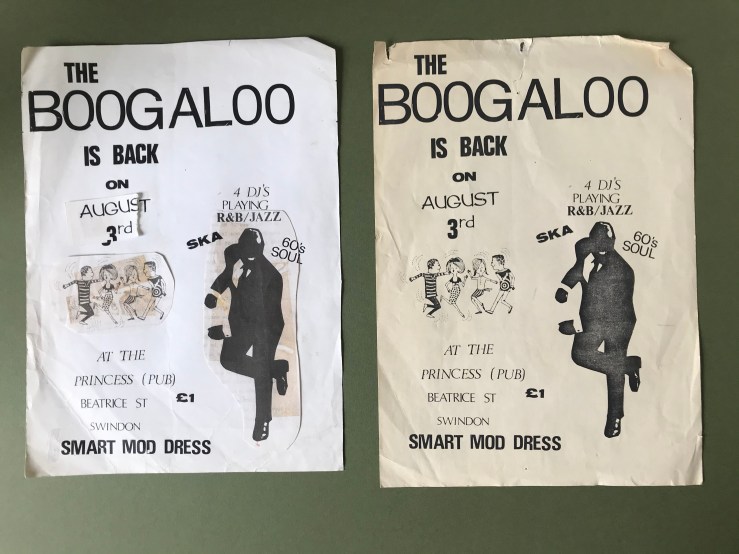
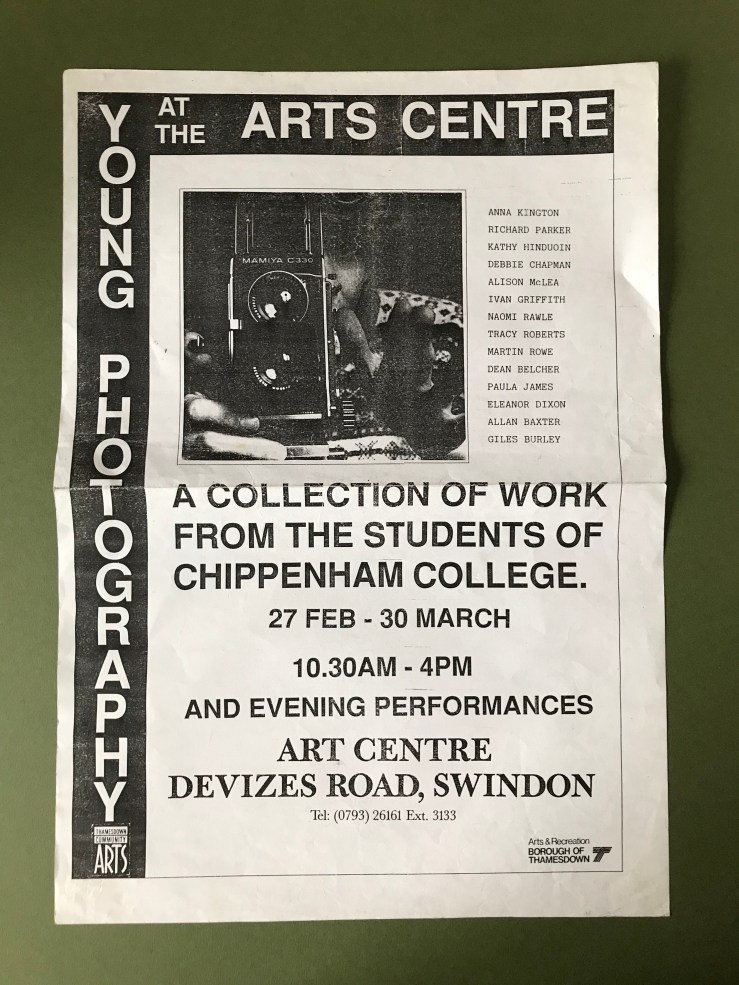
The skills learnt were transferable as well. I did not make a fanzine but lots of people I know did but what I did do was put on bands and clubs .We used those same skills to make our posters,flyers and tickets. Photocopiers,staples,reused images and most important of all letraset,rub down transfer letters on a sheet that came in hundreds of fonts.

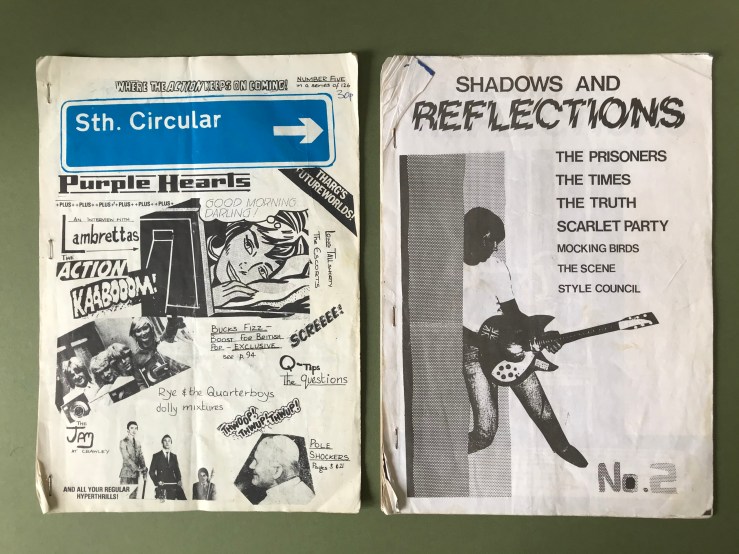
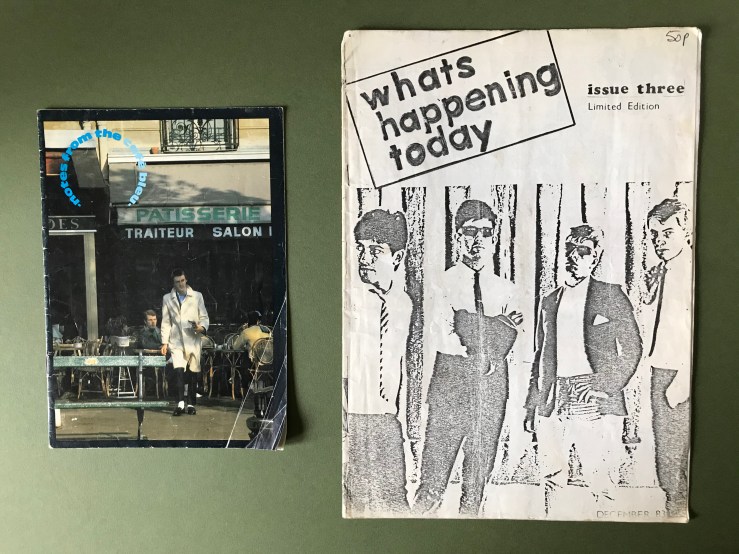
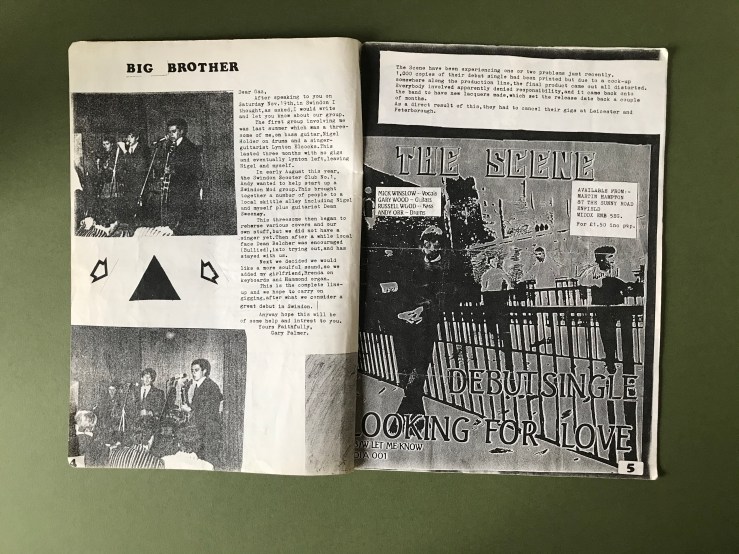
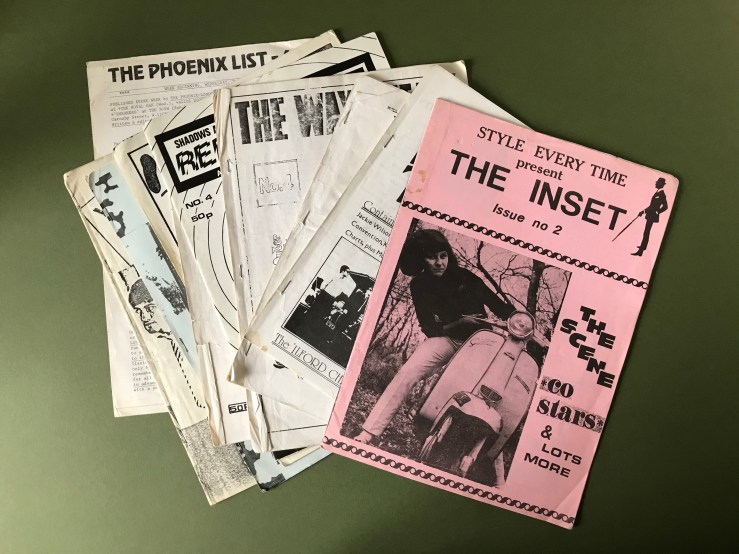
I have looked in my loft and found some examples of fanzines from around 1982-1985,some flyers and last of all a link for the digital fanzine I made for my course work.


Bibliography. Fanzines .Teal Triggs Thames and Hudson

My fanzine …please click below


or here

zine web spreads


IMG_2958
Raw artwork/final photocopy
IMG_2959
Glossy fanzines
IMG_2960
Verging on newsletter
IMG_2961
Fanzines
IMG_2962
Even big bands were in on it
IMG_2963
Fanzines contents
IMG_2964
Collection of fanzines

IMG_2965

IMG_2965
My first exhibition poster

Screenshot 2020-07-04 at 14.04.03Screenshot 2020-07-04 at 14.04.44Screenshot 2020-07-04 at 14.04.59Screenshot 2020-07-04 at 14.05.30


Week 5 PHO703 Roadmap

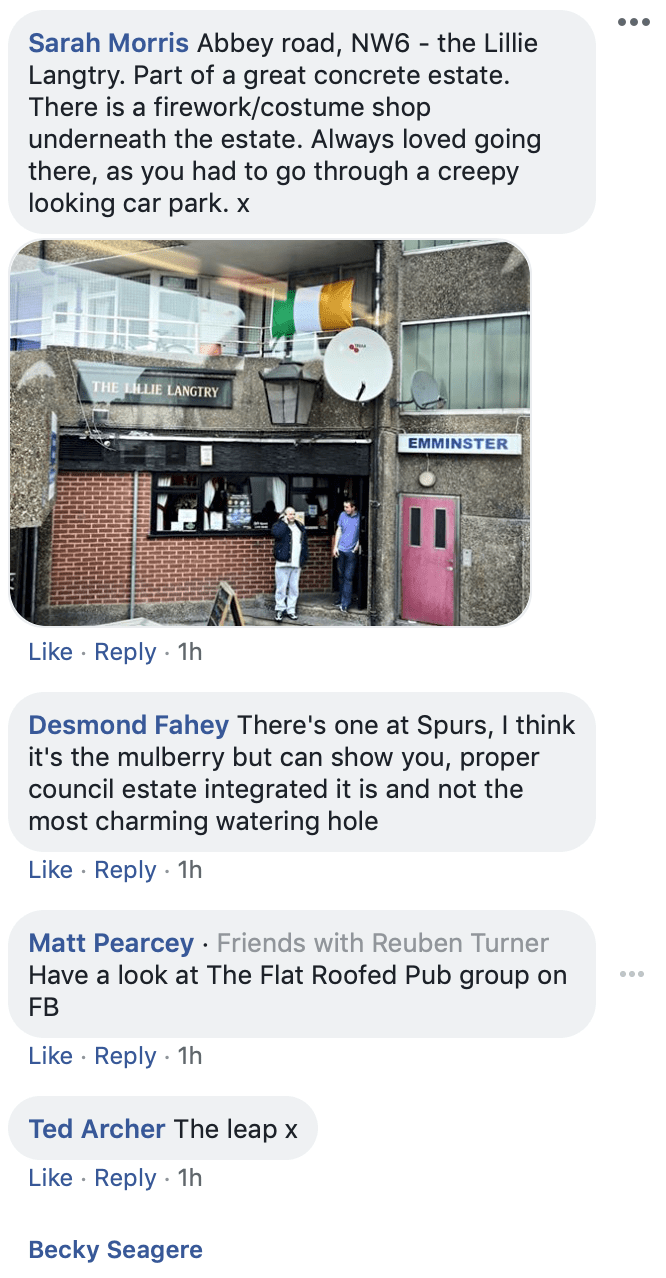
Damned… I missed the forum before it shut. My road map/plan is to within the next 3 weeks  carry on with the lockdown shoot exploring football stadium on my bike,whilst researching and introducing the next phase of the project that I think I will make up project as I move forward.As a direct result of shooting my football project I have been exploring the Estate Pub,an institute provided as part of the post war social housing experiments.Often in a state of repair these days my aim is to celebrate the ones still used as a hub of the communities they were designed for or in the case of some which have  opened up for use of wider communities.

Unfortunately or not this as sparked a more personal idea and having gained feedback from my tutor Laura is one I intend to pursue that links all three areas.

My Grandfather who I know little about was a steward of Working Men Clubs in the UK. My experience of them was gained via my own father who used them frequently.At the age of 18 I was bought membership,to me it was an anathema,the complete opposite of my forward thinking teenage self ! It represented all that was wrong in a microcosm.

I’d like to explore how come that attitude prevailed at the time and how important they really were,what role they played in working class lives and how more importantly how well they have progressed and adapted.I know now they have and see it as a great way to explore a microcosm of working class history,feminism and gentrification.

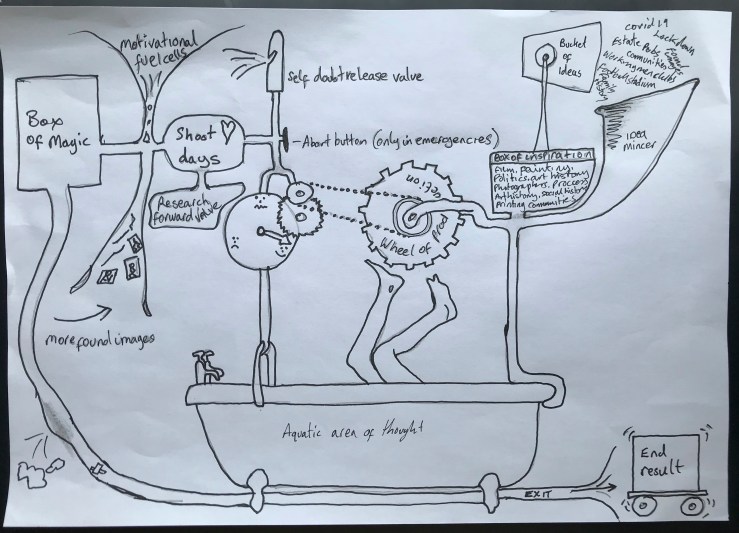
I’ve drawn a little diagram for the roadmap going forward,based on Heath Robinson it’s a kind of working method.

IMG_2956

Work in progress PHO703 Week 4

Been a great week for activities,reading and coursework.I have been making more effort to comment and take part in the forums,still no feedback from peers ! I am impressed with a lot of the work produced,maybe i’m just not hitting the mark. That will change.

Work in progress is slow but getting there,trying not to talk myself out of it and just get going with shooting it,i’m definitely always going to be a photographer who develops ideas on the hoof.

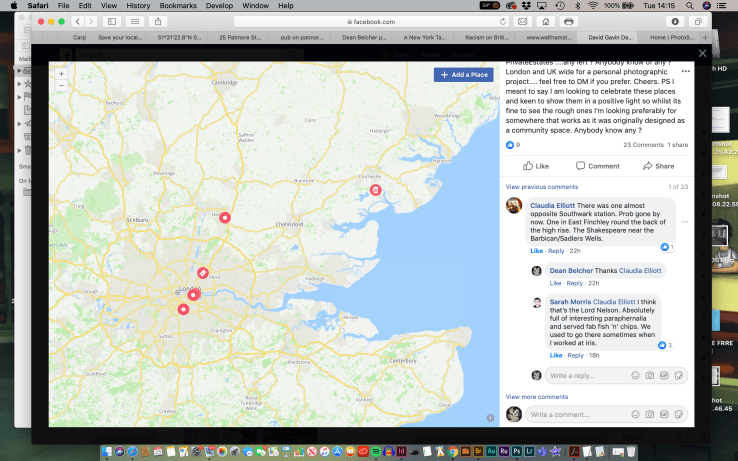
Research is going well using social media,local knowledge and the internet and google maps/earth.Tomorrow the weather should be close to alright so an early start beckons.I’m keen to show the Estate Pub in a non patronising way,in a positive but objective way.Whilst I realise the reputation which is no doubt true I want to show a positive light on these bastions of community life.To begin with this will involve simple ideas of technique,for example no forboding moody skies hence the early start if i’m to show it in the morning glory of a golden sunrise.

Pubs are still shut until July 4th so some exteriors this week and hopfully with more research or maybe even a chance conversation one of the locations will throw up a welcome to explore further the character’s and stories.

This slideshow requires JavaScript.

Screenshot 2020-06-23 at 14.15.48Screenshot 2020-06-21 at 15.32.10Screenshot 2020-06-21 at 15.32.22Screenshot 2020-06-21 at 15.32.30

Week 4 PHO703 Alternatives to my usual way of working

I guess you would call my practice very much planted in the camera/lens based category,I’ve always enjoyed organic hands on areas such as printing,photograms,cyanoptypes etc but have shied  away from more computer base experimentation,I’m not even much good at retouching.

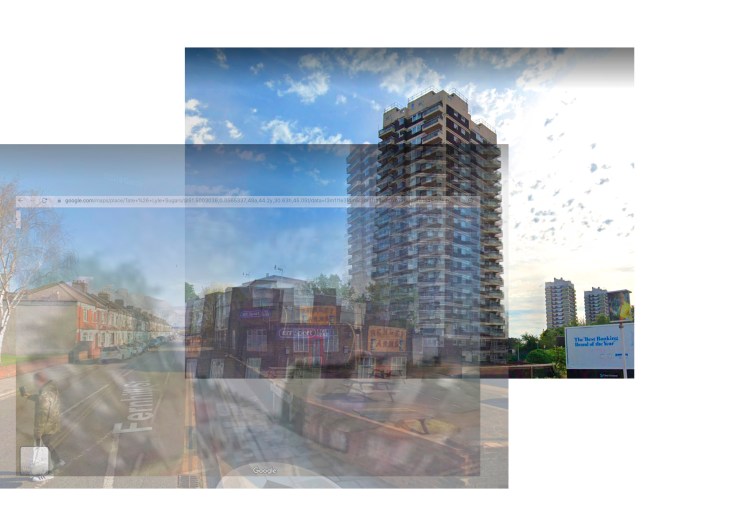
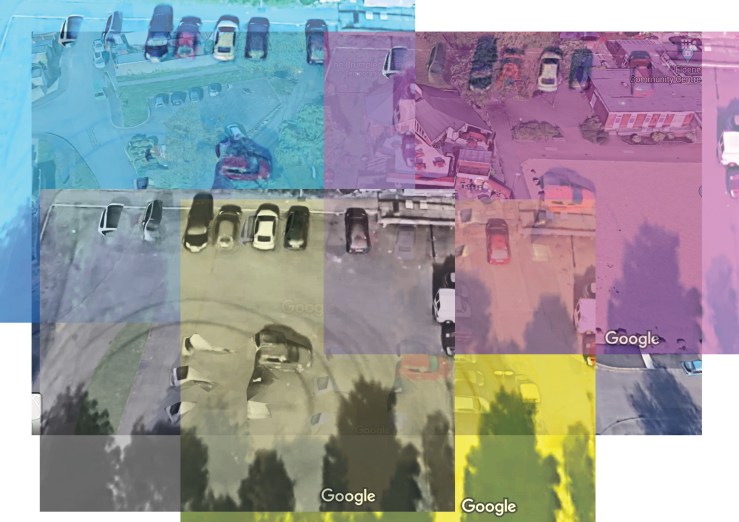
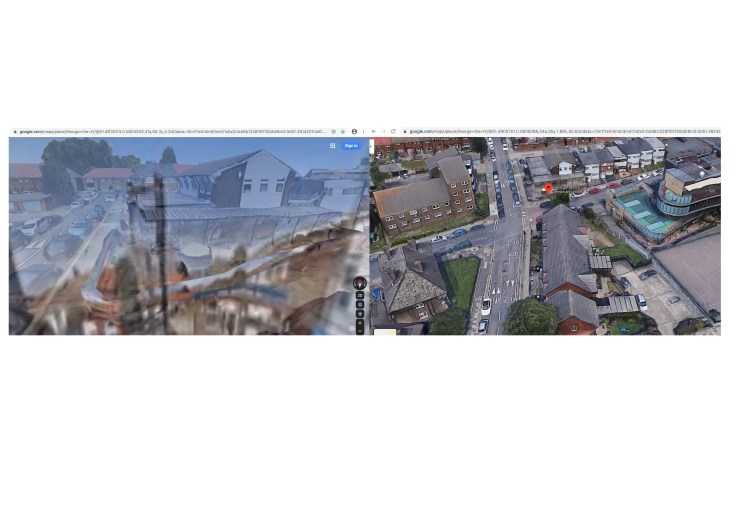
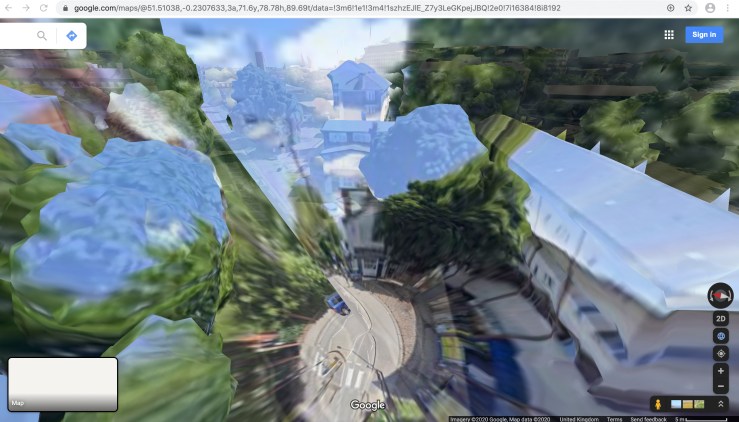
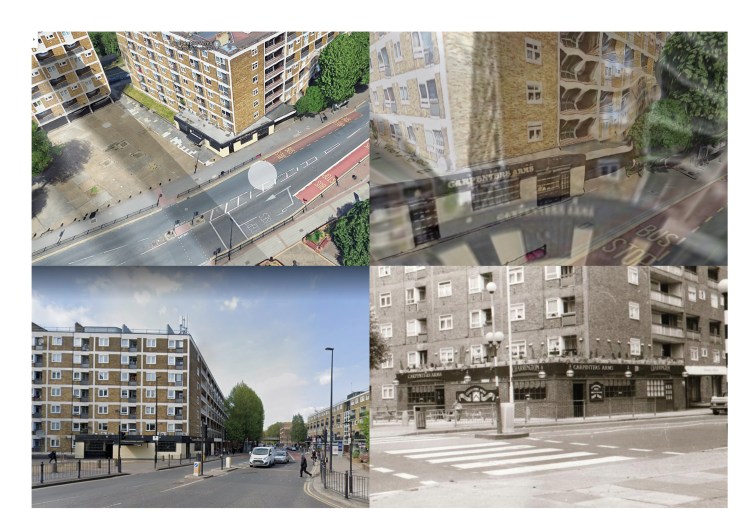
I did enjoy this experience though and decided to use it to explore the non lens based digital options available.The results are simple and varied .I learned alot about the process and other ways of seeing.Particulary I enjoyed the way time is altered when using google maps/earth.

Starting of as a tool to view potential sites I plan to photograph for my lens based project it soon became apparent that there was potential to investigate further how photography and time relate in story telling,taking some of the work we explored last module around time I was able to expand  my knowledge and ideas around this further.

Because of the nature of the technology quite minute movements from say 2D to 3D or even as simple as turning a street corner certain things appear,disappear or even reappear,usually people or other vehicles,in the most peculiar and unnatural way,out of sync.It reminded me of one of the first movies to use simple special effects A trip to the moon by  Georges Melies who used a simple technique by todays standard but at the time was groundbreaking called substitution splice.This is where the cameraman,in my case the google camera car stops filming something is replaced in my case again it could be a passing car into a clear space then filming commences giving the appearance of objects suddenly appearing and disappearing.Its a crude method of using time,in Melies on purpose and in the absence of sophisticated editing techniques of today and in Googles I guess because it just does not matter with the objective mapping the city,the idea of continuity is not important and as such it throws up lots of interesting scenarios.

Doug Rickard explored these in his book A new American Picture.In searching he found moments in time on street corners and remote roads of the US.

It’s not something I felt I would have been interested in too much before beyond a novelty value but can see it offers lots of ideas around time,revisiting and reusing imagery,I will be taking this further as my next two projects progress.

Below are 5 examples of how I have started to explore .

Untitled-6Untitled-5Untitled-3untitled 1Untitled-2

Week 3 task PHO703 Zines

To a certain extent I failed this one,with other commitments time as become a little more precious and whilst it was my intention to collaborate,I love collaborating…. I stormed ahead on my own.

Also in the interest of time I did not make a physical version as with the Rucsha exercise which was so much fun.Fanzines are of a huge interest to me,they were the mainstay of info in my teens I bought many and still have them it was our version of social media,quick sometimes weekly with all the low down of what clubs,gigs were on,what was in clothes wise and most definitely what was not,some could be quite scathing.

Like the flyers we made letraset,found (stolen) images from books and magazines and the library photocopier were essential.

Here is a book that I love,it as fanzines by friends of mine in it from back in the day and many many more up to date ones.

https://www.waterstones.com/book/fanzines/teal-triggs/9780500288917 (Links to an external site.)

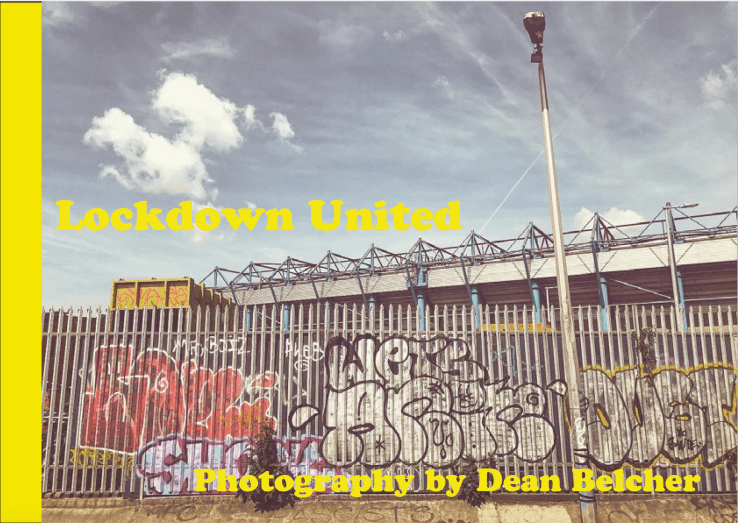
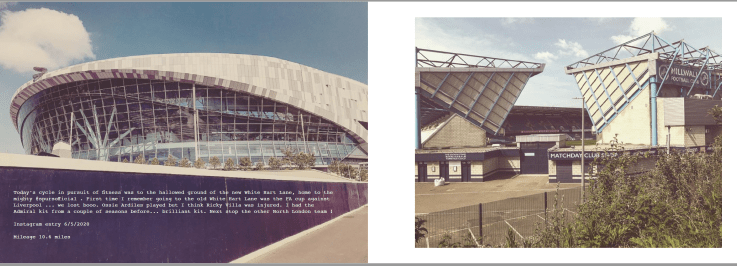
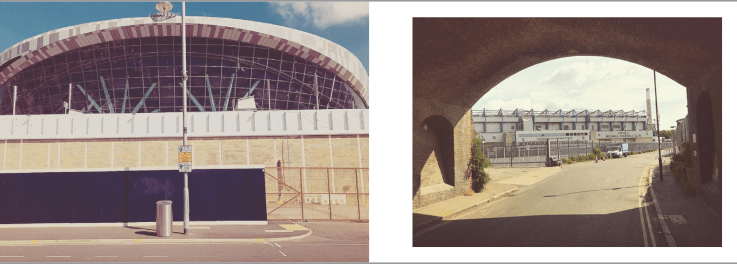
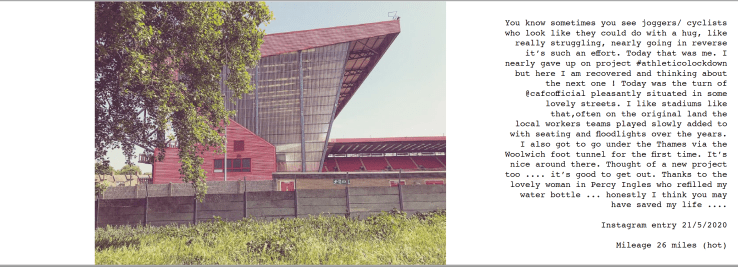
Any way below is attached a PDF version and here is an online version of my digital offering.

https://issuu.com/deanbelcher1/docs/zine_print_pageszine web spreads

zine web spreads

Week 3 PHO703 Learning with others

For most of my work i’d say the subject is of the main interest to me,of course once I start to make photographs that is the icing  on the cake and takes over from the excitement and enjoyment of the research period.For me the process and of research,production involved in reaching my objective of taking the images are one part,the taking and telling of the story another,both equally important and both useless and pointless without the other. For me the story telling,the discovery of something or someone new to me is the exciting moment,I use photography sometimes within my commercial work but mostly in my own practice to inform others but more often or not to educate myself.

I have a strong moral compass and feel it is important in my work to have the co operation of the subject,for them to realise my true outcome goals and be happy to participate,if I was to feel I was exploiting them in some way i’m not sure I would feel comfortable with that the proviso being it was something or someone I had empathy with.

It is important to remain impartial in most circumstances and try to avoid the influences from the subject but also it’s fair to say by taking some things on can lead to a more informed judgement as to how the project may develop.

For my next project I envisage meeting people as it develops and I fully expect to be informed about things in the stories they tell that will influence the way the project develops and most likely who and what I photograph.What I will avoid and have had to in the past is perhaps straying to far off the original path to maybe shoot something more out of a sense of obligation than necessity or any real use towards the end story,sometimes this can really take the project off on a tangent that must be avoided.

Week 2 PHO703. Artists that re use, re visit and influence.

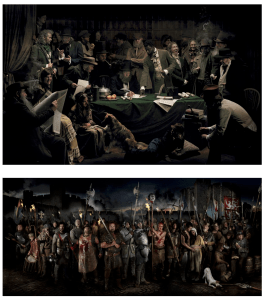
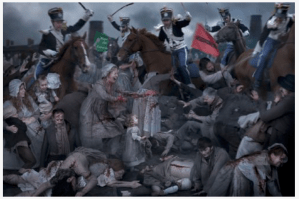
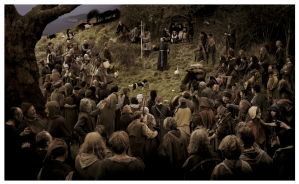
Discussing Henry Peach Robinson and his use of the tableaux brings to mind my old boss Red Saunders who as used the technique of using several plates or layers, cutouts of negatives to form a final piece, unlike Peach Robinson he uses updated modern digital methods whilst staying true to the technique of creating the final image out of up to 80 digital plates.

His project Hidden takes many months,sometimes years of research and preparation and post production.Although Saunders is rooted deep in photography he draws on his experience as a film director and political activist to pull these huge productions together.

They often start with a background plate with extra elements added to build the narrative,the some people are shot in situ whilst others are skilfully shot on green screen and added later,often for reasons around production times but also because content that may be more difficult to shoot in a larger group situation.Each element is there for a reason often symbolic and relating to the conventions of classic paintings,he is. big Rembrandt fan.This method of working is very much like the painter except where a painter will add Saunders must both add and remove.Below are some examples of his work.
All images ©Red Saunders

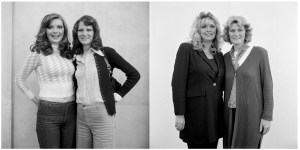
Daniel Meadows is a good example of a photographer reciting one of his own older projects, usually someone who works in quite a traditional method of lens photography in the 1990s he revisited the people he photographed in the early 1970s as part of the Free Omnibus portrait project resulting in a new book called Now and Then featuring both sets of images side by side.

The original project consisted of him buying an old double decker bus and converting it into living quarters and a darkroom. He then set off around the country using newspaper ads (pre twitter) to let people know he was arriving on a certain date and was offering a free print in exchange for allowing him to photograph them ,he only only ever shot one frame and that was what the sitter got as print the next day before he set off for the next town.It’s a fantastic slice of time made even more poignant by the use of the one frame technique and an even better example of exploring time on the return visit where he would shoot at the same spot,sometimes altered with gaps in groups where some people are missing due to emigration or death.Some great examples below.
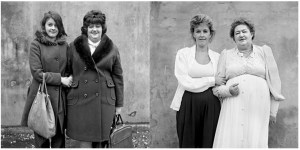
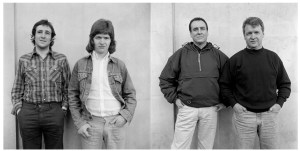
©Daniel Meadows


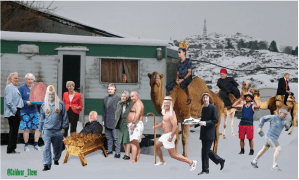
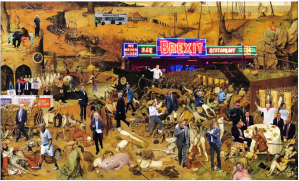
Moving on in a similar vein of tableaux but this time appropriating other peoples work is Cold War Steve. Christopher Spencer working under the  artist name Cold War Steve started his career asa collage artist and satirist whilst working as a teacher using a simple phone app to pass the time and satirise the growing disparity and despair he was experiencing with the government,their advisors, certain celebrities and the people who they affect.Using the Eastenders Character Phil Mitchell,played by Steve Mc Fadden (hence  Cold War Steve) to represent the Everyman he put together simple collages from found images online whilst on his bus journey to work, he then posted the results online and became an instagram sensation. Since then (he still uses Instagram as his main outlet posting everyday) his imagery as become more sophisticated and can be seen in published book form affordable prints and postcards or more expensively as limited edition prints.You can even buy them as jigsaw if you like,so keeping to his original agenda and making his work in available to the general public as well as collectors.

Spencer used this quite crude method to create a very sophisticated view ,which again takes much from the conventions of classical painting adding and subtracting to get his strong message across, despite the often small viewing media, in this case the phone screen there is an enormous amount of detail and hidden messages that allow for a longevity, you never quite see everything first time around.

Interestingly Spencer started this project as part of a self initiated therapy following a bout of depression and leave from his work as a teacher.You can read more about him and view his images via the links below.

https://www.theguardian.com/artanddesign/2019/jun/15/cold-war-steve-satire-is-my-antidote-to-a-scary-world-interview

@Coldwar_Steve

https://www.instagram.com/coldwarsteve/?hl=en
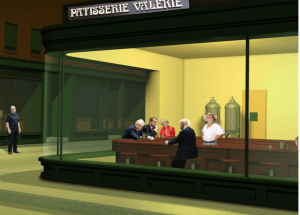
 

All images ©Cold War Steve


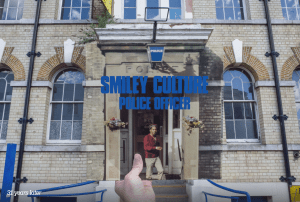
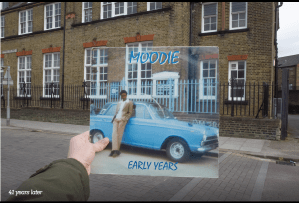
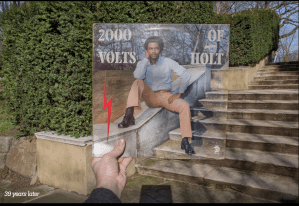
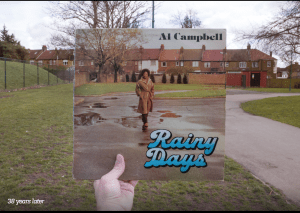
One of my absolute favourite photographers who use revisiting as a technique is Alex Bartsch. I’m biased as a big Reggae fan but I also like the way he explores time and how the backgrounds and places he revisits change or in some cases do not. For me that represents a lot about what the music black culture and Racism is dealt with. Some things move a little but not a lot changes.

Bartsch as taken one piece of finished art, in this case the LP cover and revisited the places they were shot, lining up the sleeves to match so creating a new piece, the fact that he keeps his arm in shows the viewer there is no attempt at discussing the fact it is a new piece and as no pretence to merge the image seamlessly,there is that 4th wall element.

Below are some of my favourites to see more here is a link.

http://www.alexbartsch.com/covers
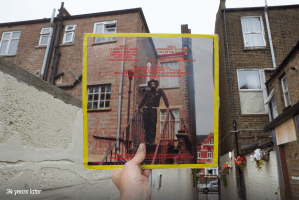
All images© Alex Bartsch


Bibliography

https://www.theguardian.com/artanddesign/2019/jun/15/cold-war-steve-satire-is-my-antidote-to-a-scary-world-interview