
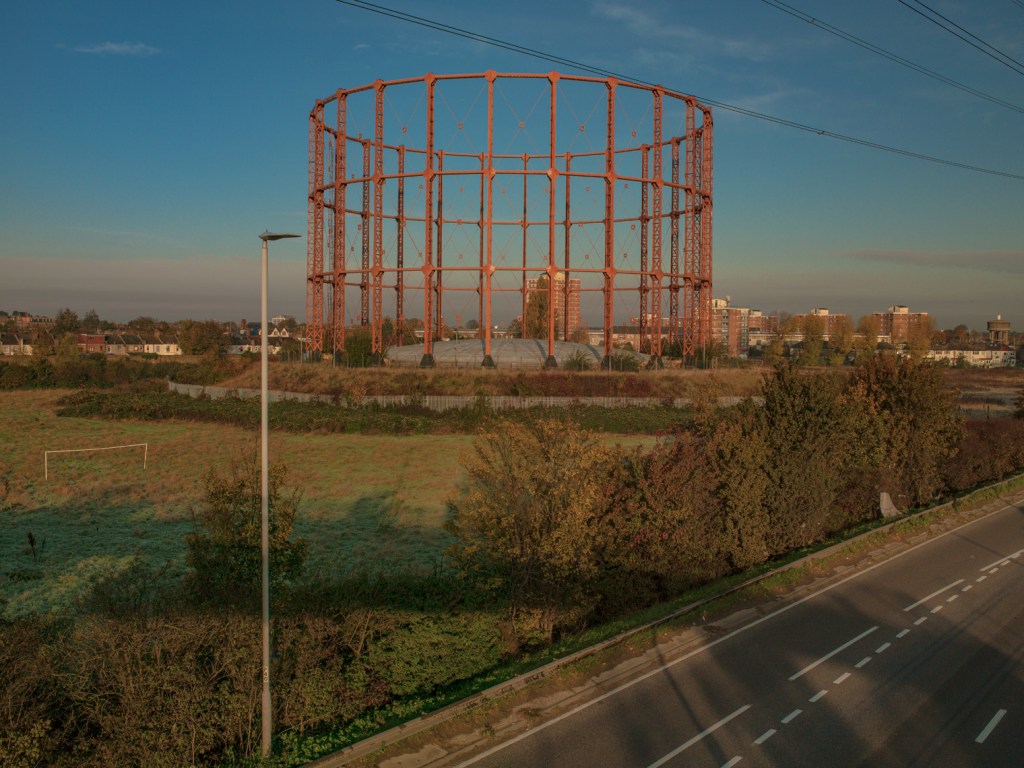
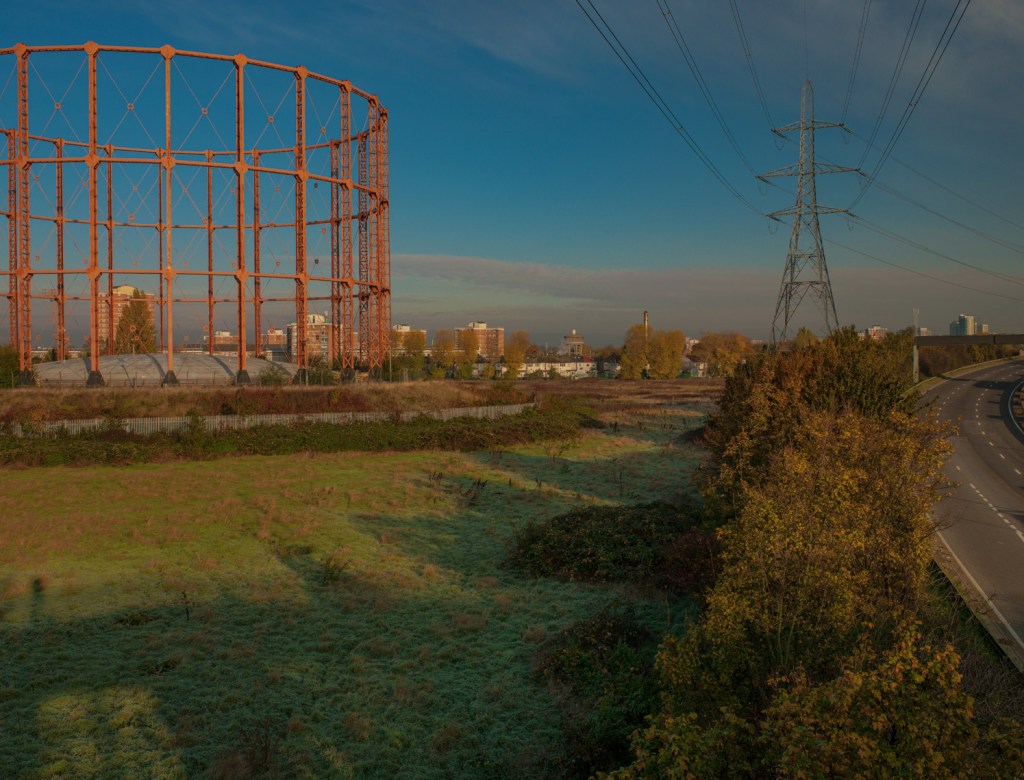
Following on from my previous shoot I went out this morning to shoot quite near to the end of A406 near Beckton,it’s a location I have visited before on a previous project which I actually abandoned some years ago.Today I used that knowledge to inform this project,I think it’s finally found a home within what I can see developing into an interesting body of work.Everytime I head out I feel the ideas develop,in this case the idea of journey and migration is coming to the fore more and more,it’s an idea i’m going to research further.With regards to this image unlike the others in the series so far i’m struggling to choose between these two images that I have edited down from a larger selection,I think they both tell the story within the context of the whole series,it’s really down to aesthetics at the moment ,although I am erring towards the image with more road and the football goals.In case you was wondering my previous abandoned project was to be a series of landscapes influenced by music,in this case this is alledgedly Itchycoo Park made famous by the Small Faces although there is some rumour it could be one other place nearby,It seems most likely though through my research that by all accounts it is this location,named locally because of the abundance of stinging nettles,when the boys played over here as youngsters it nearly always resulted in someone getting stung ! Who knows…I like the story in any case.
Category: PHO704:Work in Progress/Project Development
Sustainable Prospects PHO704 19/20 Part-Time Study Block S1 A406/Ideas and influences
My project for this module at least is called A406 I will be posting images as my work progresses along with more information in the Blog section of this site.There you will find analysis and critical research pertaining to the work.Below are the first four of these images but first a little about some of the influences.
“In 1947 the writer Jack Kerouac was thinking of a novel that would express the free flowing life made possible by the automobile” David Campany – Open Road
For a few years Kerouac kept notes on the trips he did with his friends such as the Beat poet Allen Ginsberg and Neal Cassidy,he kept notes on the people they met,food,cars politics and places.In 1951 when he decided to sit down and write this novel that would become On The Road he concluded to capture the spirit of the road trip it would be best written in one long flow.Famously he typed the story on one continuous roll of paper taping each sheet as it ran out together resulting in one long roll 120 ft in length.
It was around this time in the USA, undisputedly at the forefront of automobile use and consequently the highways that carried them, in order to carry the growing number of cars the government of the time under Dwight D. Eisenhower set out to expand and standardise the highway system, democratizing car use and in turn making the car no longer a luxury but an integral part of everyones life,with of course billions $ in tax revenue in being generated on fuel/oil consumption,nothing much as changed there !
This desire to tie the country in via “one smooth ribbon of asphalt” was paralleled by many other forms of standardisation, which took hold in the USA much earlier than here in the UK, but since the advent of the 1980’s free markets ,corporate culture and globalisation as now become the commonplace and is something this project will also explore. Much like in the USA earlier we now accept modular architecture,chain stores,retail parks and business/industrial estates,generic petrol stations and advertising selling the same generic goods for our homes as the norm.
I’m interested in the origins of commerce that built and continues to build up around the road,much like in more ancient times civilisations built around water and rivers,essential for life as well as the transportation of goods we continue to do so,settling in and around their edges.
James Agee wrote about this first in 1934 after being commissioned by fortune magazine in his piece The Great American Roadside.This essay was visionary and fragmented in it’s style and prophecy,in parts the list of facts read like a poem in honour of this new phenomena. He talks at one point about the huge wealth being generated around the road and the mobile citizen.He wrote about the extensive breadth of new products and methods to “tease and tempt” this new market for the advertisers. All over the USA new business and communities sprang up and unlike the railway temptation was not just at the towns with a station,new ways of easing money from these new consumers could be all along the route. As a result, bearing in mind this was the 5th year of the great depression as a result of this huge new programme of roads generated $3,000,000,000 of extra revenue.Where was this money made, well Ice Cream parlours,Hot Dog stands,roadside cafes,advertising hoardings and the new holiday cabins which was the forerunner to the roadside motel with it’s standardised approach it soon become the go to place to rest your head for one night before moving on to the next one the following night,so creating a whole new industry,used in literature,painting,music,photography and films ever since from Frank Capra’s hit film It happened One Night,arguably the first road movie, giving rise to a whole new genre ,through Hitchcock’s Psycho to the TV series Bates Motel. Often featured as the hideout or the home of the sleazy villain,the outsiders,much like the edge of town location of most motels it’s often portrayed as the place that houses those on the fringe of society or the drifters moving through life from one scheme or destination to another,a journey.It’s with this in mind that my project will use the premise of a journey as a vehicle to explore and present some of these ideas.
In 1953 Robert Rauschenberg experimented with this idea of the road trip,only his was in the form of abstract painting, exploring the idea of traces and evidence.Along with the musician John Cage (a friend of his) he glued sheets of paper together to form a long strip then as cage drove a Ford Model T car over the paper Rauschenberg tipped black paint onto the wheel producing what was to become Automobile Tire Print presented in its entirety as a scroll ,a perfect metaphor for the road trip in abstract form, and is a great example of work being beautifully and thoughtfully presented for exhibition.
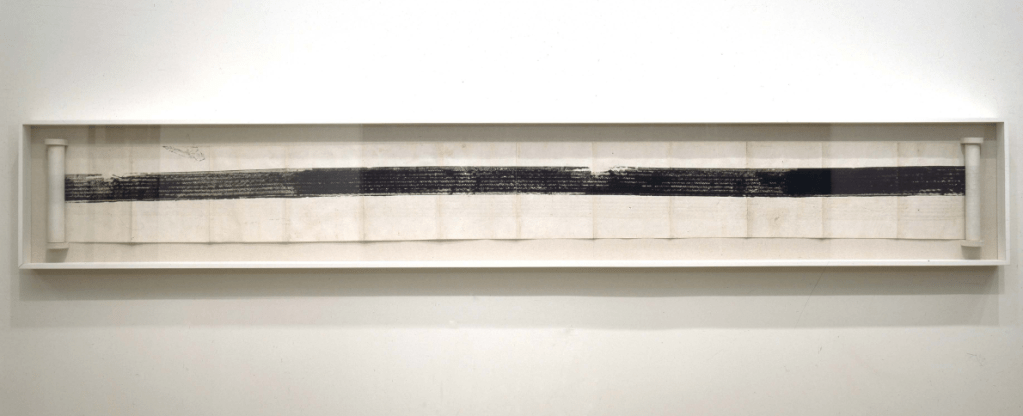
Automobile Tire Print 1953 . Robert Rauschenberg
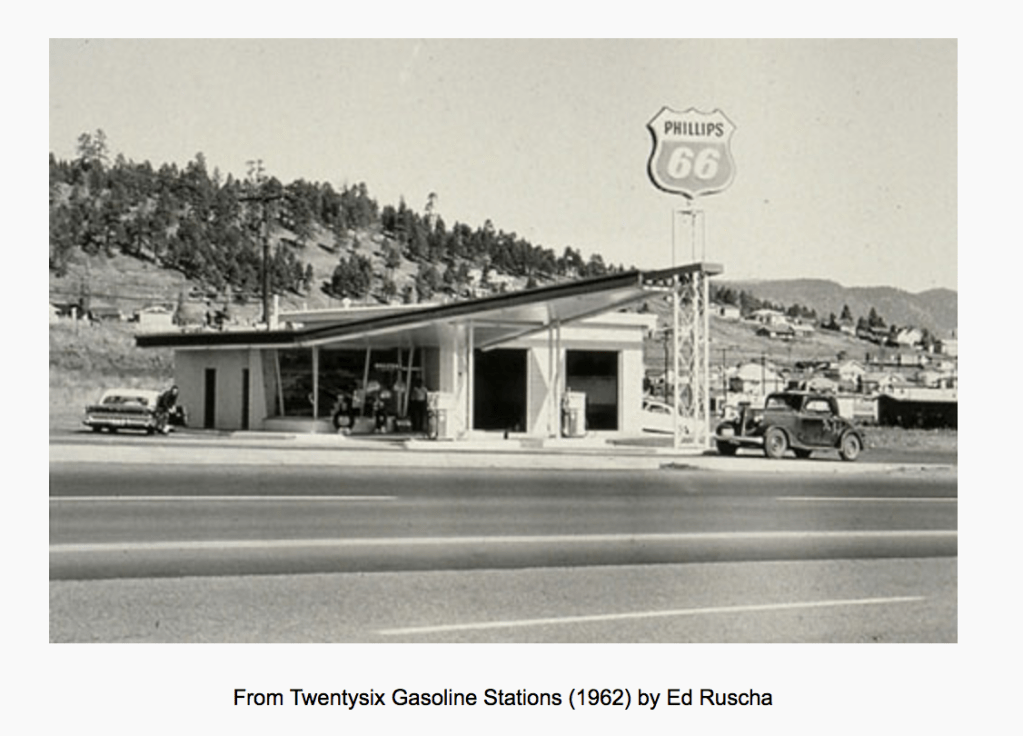
Another example of well thought out presentation I have seen is the work of Ed Ruscha and his series of 26 Gasoline Stations,a project he made en route to his parents home a journey he did many times, he decided to keep it simple almost like a guidebook as one continuous flow in sequence of order,again mimicking the open road and the idea of continuation,both of which I am considering as options when presenting my work .
A406 Images
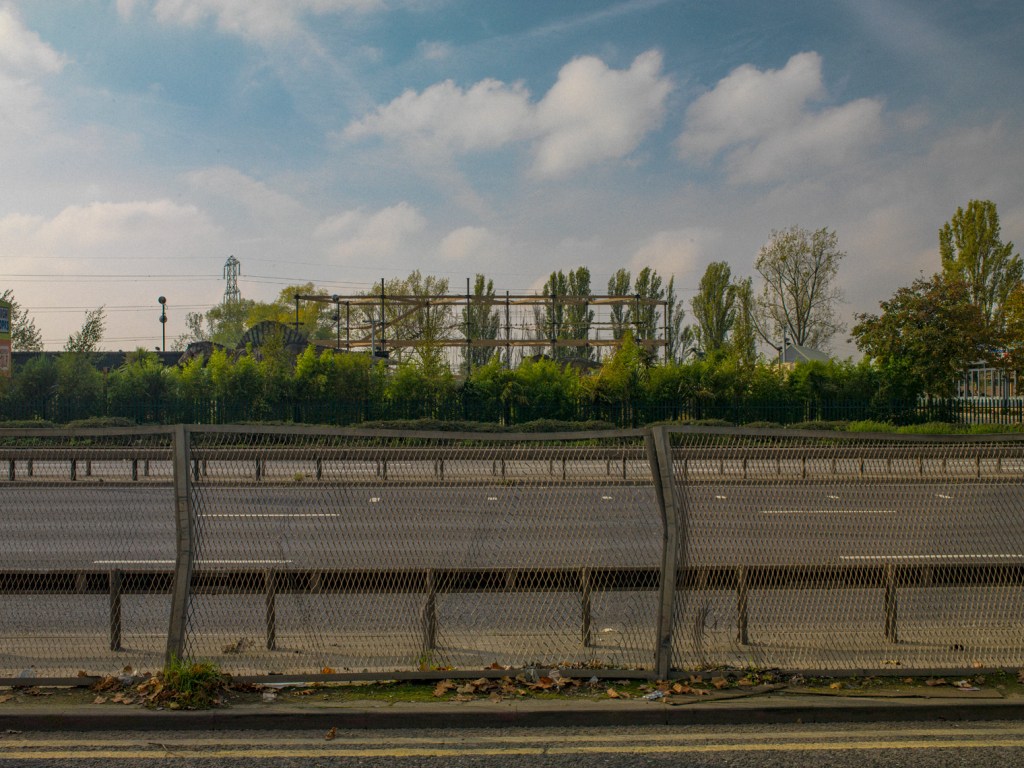
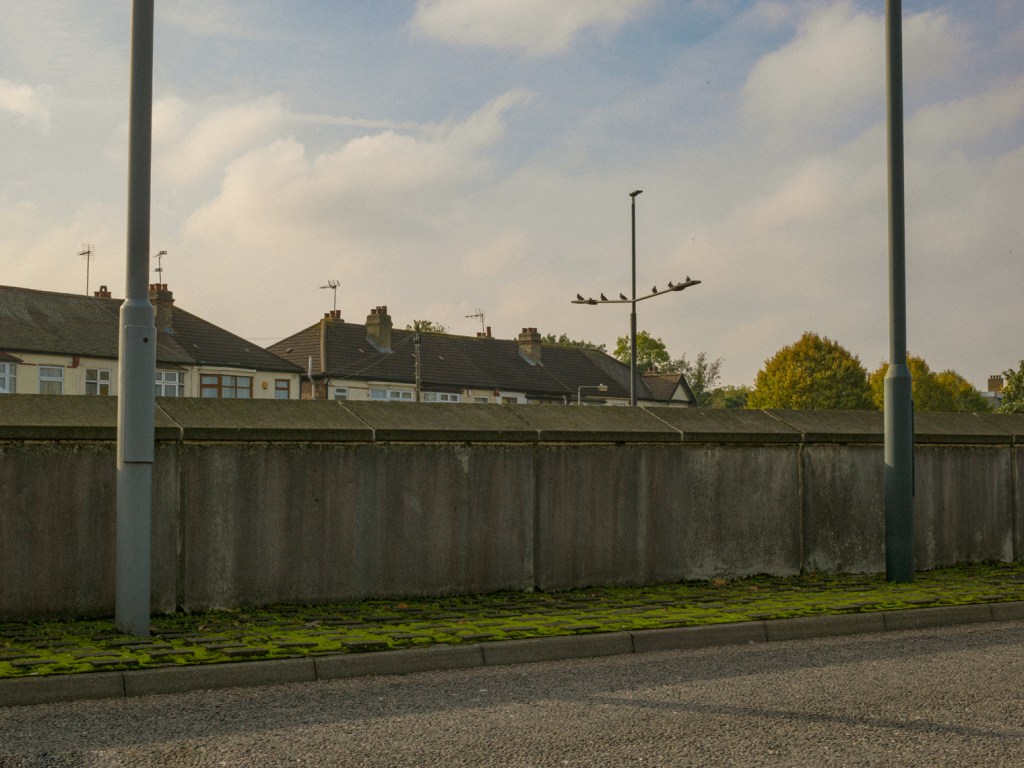
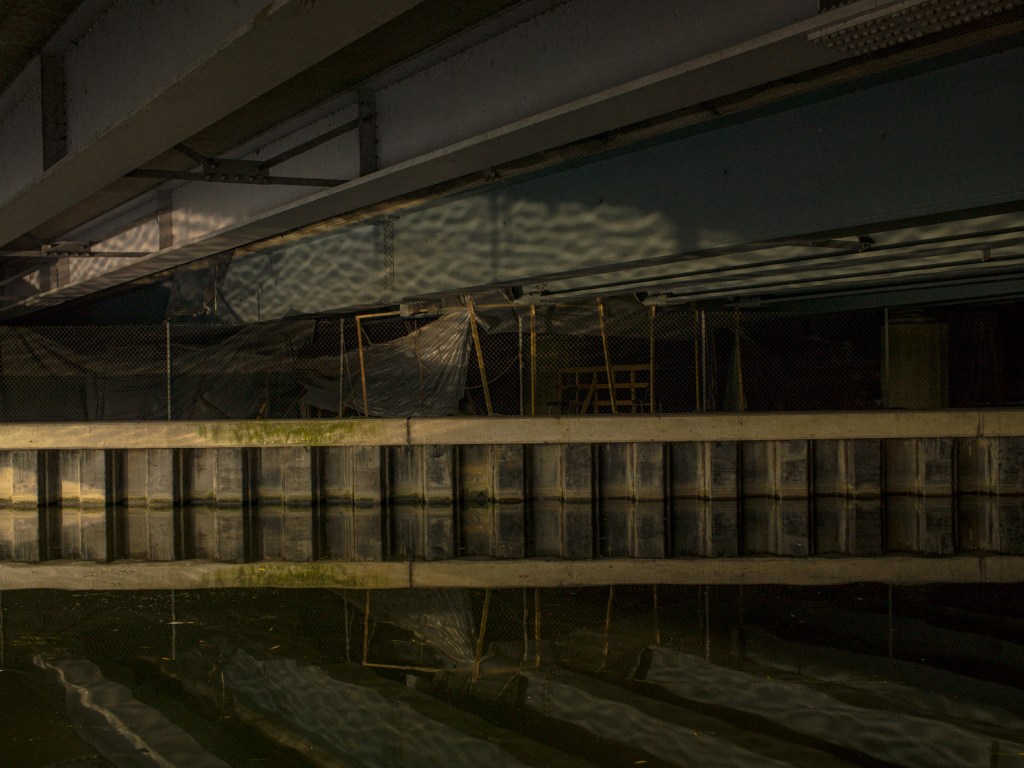
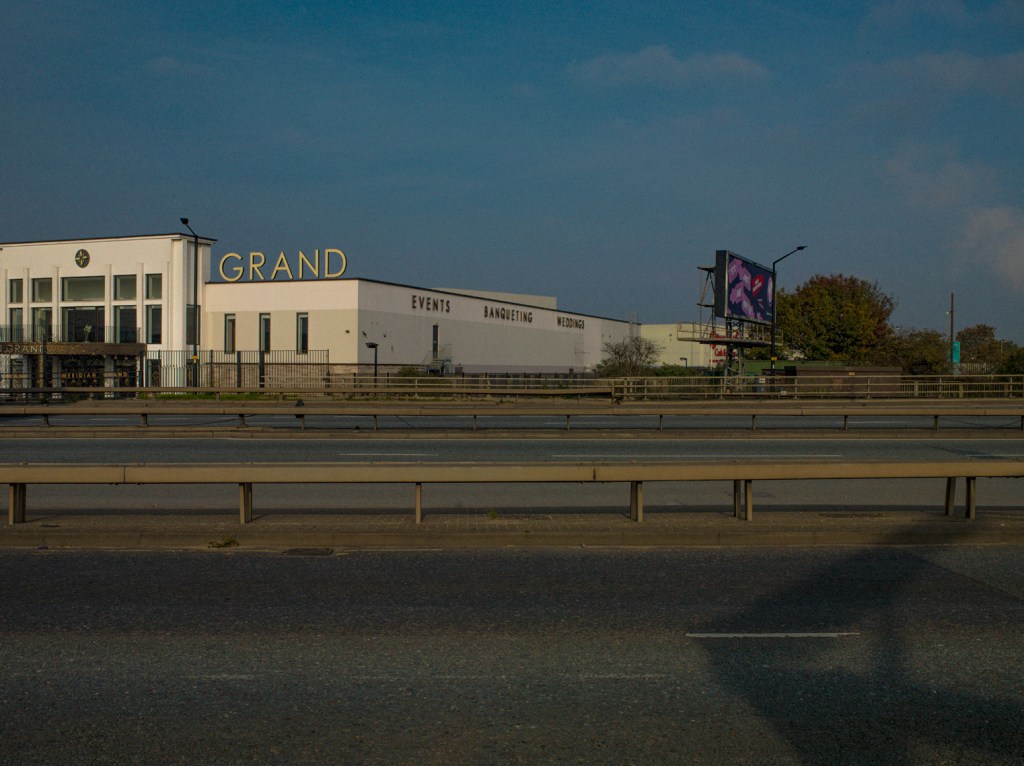
Images from top down all shot by me Dean Belcher
Dinosaur and Crazy golf /A406
Home to roost/A406 .
Abandoned illegal rave/A406 .
Isn’t it Grand /A406 .
 DEAN BELCHER CRITICAL RESEARCH JOURNAL